
Best Omega-3 Supplements in 2026: EPA vs. DHA, Dosage & Top Brands Reviewed
The omega-3 aisle is a masterclass in misleading labels. We cut through it: real EPA/DHA numbers, the form that actually absorbs, the dose that fits your goal, and four vetted brands compared on facts — not marketing.
Bigger bottle, louder label, fancier name — none of it matters as much as the two small numbers hiding on the back: EPA and DHA.

📋 What's inside
- The one number the front label hides from you
- EPA vs DHA — what each one actually does
- The form war: triglyceride vs ethyl ester vs rTG
- Purity & freshness — the certifications worth knowing
- The reviews: four brands on real numbers
- Head-to-head comparison table
- Dose by goal — stop guessing
- How to take it (and kill the fishy burps)
- Plant-based & algal options
- Who should pause before taking omega-3
- FAQ
Walk into any supplement aisle and the omega-3 shelf will hit you like a wall of identical amber bottles, each screaming a different giant number at you: 1000 mg! 1200 mg! Triple Strength! Ultra Pure! They all look like winners. They all promise the same glossy heart-and-brain benefits. And almost all of them are quietly hiding the one piece of information that actually determines whether you're getting what you paid for.
This review exists to fix that. We're not here to crown a single "best" bottle, because the honest truth is that the best omega-3 is the one whose real EPA and DHA content, chemical form, and purity match your specific goal — and that you'll actually remember to take with a meal, every day, for months. A perfect product you forget on the shelf is worth exactly zero.
So here's what we'll do. First, we'll show you the label trick that fools most buyers (it's not a conspiracy, just lazy marketing, but it costs you real money). Then we'll settle the EPA-vs-DHA question properly, explain why the chemical form changes how much your body absorbs, and tell you which purity stamps are worth trusting. Only then — once you can actually read a label — do we review four vetted products from our tested list, comparing them on their real numbers with score bars you can see at a glance, and finish with the dose, the storage, and the safety notes that turn a good purchase into a good result.
01The one number the front label hides from you
Here's the trick, and once you see it you'll never shop for fish oil the same way again. The big number on the front of the bottle is almost always the total fish oil per capsule — the whole weight of the oil inside. But fish oil is not 100% omega-3. A large chunk of it is other fats that don't give you the EPA and DHA you're buying the product for.
So a bottle that proudly shouts "1000 mg Fish Oil!" might deliver only 300 mg of actual EPA + DHA per capsule. You'd have to swallow three or four of them to match a single concentrated softgel from a better label. The front number is the weight of the truck; EPA and DHA are the cargo. You're paying for the cargo.
Two bottles can both say "1000 mg" and deliver three times different amounts of what you actually want. The label panel never lies — the front marketing just stays quiet about it.
The fix is a thirty-second habit: flip the bottle, find the Supplement Facts panel, and read the two lines that say EPA (eicosapentaenoic acid) and DHA (docosahexaenoic acid). Add them. That sum, per serving, is your real dose — and the only honest basis for comparing two products or judging price-per-milligram. Every review below is built on exactly those two numbers.
02EPA vs DHA — what each one actually does
Omega-3 isn't one thing; the two long-chain stars, EPA and DHA, lean toward different jobs. Knowing the difference lets you pick a ratio that matches your reason for taking it, instead of grabbing whatever's on sale.
Neither is "better." They're specialists. The smart move is matching the ratio to your reason — and making sure you get a meaningful amount of both.
The practical translation:
- Inflammation, mood, triglycerides on your mind? Lean EPA. The eicosanoid and resolvin pathways that calm inflammation run mostly through EPA, which is why EPA-forward formulas are the usual pick when an anti-inflammatory tilt is the goal.
- Brain, focus, eye health, or pregnancy? Make sure DHA is well represented — it's a structural building block of the brain and retina, and prenatal guidance specifically emphasizes DHA.
- General daily wellness? A balanced product with solid amounts of both is the easy, sensible default. You don't need to obsess over an exact ratio.
03The form war: triglyceride vs ethyl ester vs rTG
This is the second thing labels rarely explain well, and it directly affects how much of the omega-3 you swallow actually reaches your bloodstream. Fish oil is processed into a couple of chemical forms, and they're not absorbed equally:
| Form | What it is | Absorption | Practical note |
|---|---|---|---|
| Triglyceride (TG) | The natural form found in fish | High | Well absorbed; often the preferred baseline |
| Re-esterified TG (rTG) | Concentrated, then converted back to TG | Very high | High potency and good absorption — a premium sweet spot |
| Ethyl ester (EE) | A concentrated, common processed form | Lower on an empty stomach | Perfectly legitimate; taking it with a fat-containing meal largely closes the gap |
The headline takeaway is simpler than the chemistry: whatever the form, take omega-3 with food that contains some fat. It's fat-soluble. Swallowing a capsule with black coffee on an empty stomach leaves a meaningful chunk of it unabsorbed — and if you have any absorption issues (a sensitive gut, a low-fat diet, certain conditions), that rule matters even more. A meal with a little olive oil, avocado, yogurt, eggs, or nut butter is the easy fix that makes almost any good product work better.
04Purity & freshness — the certifications worth knowing
Two quiet risks sit behind every fish-oil bottle: contaminants (mercury, PCBs, dioxins that fish accumulate) and oxidation (omega-3 fats go rancid, and rancid oil is the opposite of anti-inflammatory). Good manufacturing handles both. Here's what to look for:
- Molecular distillation / purification. The process that strips out heavy metals and pollutants. A quality brand will say so plainly.
- Third-party testing stamps. IFOS (International Fish Oil Standards), USP, NSF, and GOED membership are the names that mean an independent lab checked potency, purity, and oxidation. IFOS in particular publishes batch-level results — the gold standard for transparency.
- An expiration date, clearly printed. Omega-3 degrades over time; a dated, well-stored product is a fresher one.
- The sniff test. A fresh softgel smells mild, faintly of the sea. A strongly fishy, sour, or "off" smell or taste is a rancidity red flag — return it.
- Storage. Keep the bottle cool, dark, and (after opening, especially for liquids) refrigerated. Heat and light are the enemies of freshness.
05The reviews: four brands on real numbers
Now that you can read a label like a pro, here are four vetted products from our tested list — each scored on the dimensions that actually matter: potency (EPA+DHA per serving), form/absorption, purity signals, and value. We tell you exactly who each one fits, and we lead with our balanced everyday pick. Numbers are taken from the labels; price tiers ($–$$$) are relative, not exact.
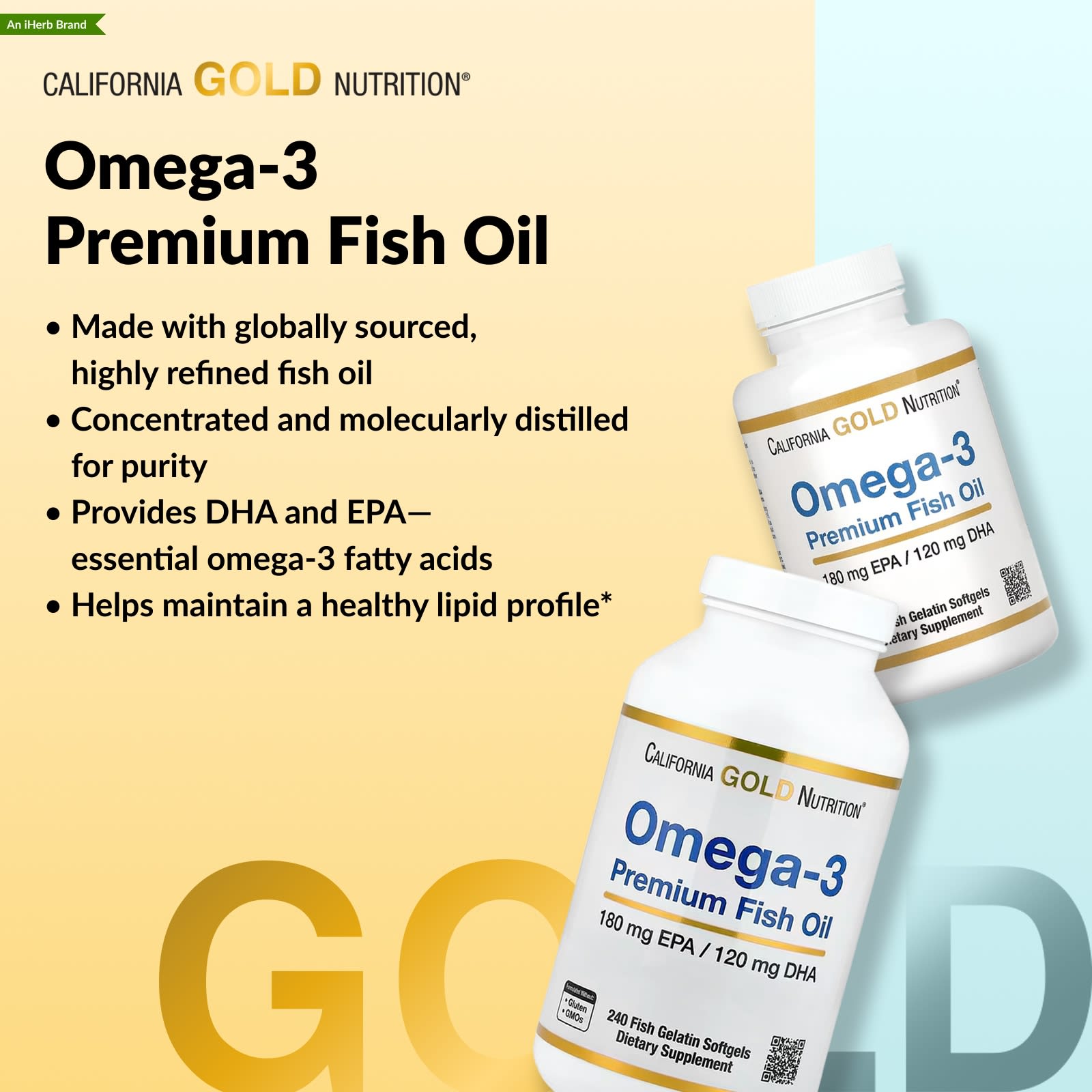
California Gold Nutrition, Omega-3 Premium Fish Oil
A clean, well-absorbed triglyceride-form baseline with a sensible 360/240 EPA-to-DHA split. Not the most concentrated bottle on the shelf, but the form, the balanced ratio, and the price-per-mg make it the easy "set it and forget it" daily choice for most adults who eat little fatty fish.
Best for: everyday general + heart + mild anti-inflammatory support; first-time buyers who want a no-fuss, well-absorbed daily softgel without a high pill count.
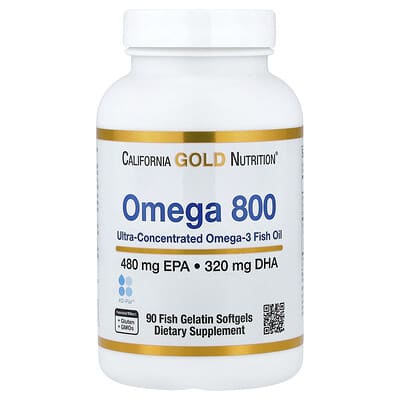
California Gold Nutrition, Omega 800 Ultra-Concentrated
The "fewer capsules, more cargo" option. A kd-pur triglyceride concentrate delivering 800 mg EPA+DHA per softgel with an EPA-forward tilt — exactly the profile you want when modulating inflammation is part of the goal, in a premium, highly absorbable form. Ideal when you'd rather take one strong softgel than three weaker ones.
Best for: people targeting an anti-inflammatory tilt or a higher daily EPA+DHA with minimal pill burden; those who value a premium purified TG form.
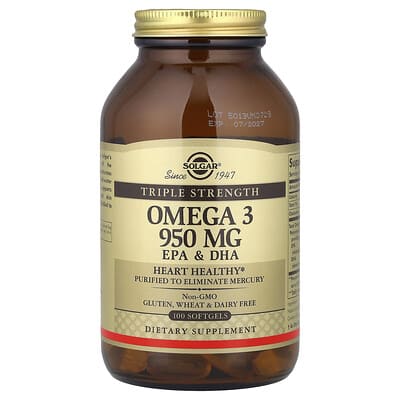
Solgar, Omega 3, EPA & DHA, Triple Strength
The highest combined EPA+DHA of the four (882 mg) from a long-trusted, quality-obsessed brand, with a nicely balanced EPA/DHA split that covers both the inflammatory and the brain/structural sides. You pay a little more for the name and the consistency — and for many, that trust is worth it.
Best for: those who want maximum potency per softgel from a heritage brand they trust, and a balanced ratio that doesn't skimp on DHA.
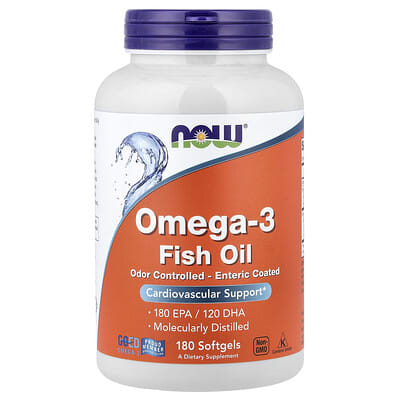
NOW Foods, Omega-3 Fish Oil
The honest budget pick — and a perfect illustration of section 01. The per-capsule EPA+DHA is modest (300 mg), so it's a "top-up" product rather than a high-dose one; you may take two or three softgels to match a concentrated bottle. But the price, the molecular distillation, and the brand reliability make it a smart, low-risk way to start or to fill a small dietary gap.
Best for: tight budgets, beginners testing tolerance, or anyone who already eats some fish and just wants a gentle daily top-up.
06Head-to-head comparison table
The same four products, side by side, on the numbers that matter — so you can scan and decide in seconds.
| Product | EPA | DHA | EPA+DHA | Form | Relative $ | Fits best |
|---|---|---|---|---|---|---|
| CGN Premium Fish Oil | 360 | 240 | 640 | Triglyceride | $$ | Everyday balance |
| CGN Omega 800 | 480 | 320 | 800 | kd-pur TG | $$ | Concentrated, EPA-forward |
| Solgar Triple Strength | 504 | 378 | 882 | Concentrated | $$$ | Max potency, trusted brand |
| NOW Omega-3 | 180 | 120 | 300 | Distilled | $ | Budget / gentle top-up |
07Dose by goal — stop guessing
There's no universal number, but there are well-trodden ranges. Use these as a starting point and adjust with your clinician — especially if you have a health condition or take medications.
| Your goal | Combined EPA+DHA / day | What that looks like |
|---|---|---|
| General wellness / topping up low intake | ~250–500 mg | 1 NOW softgel, or part of a Premium serving |
| Heart & everyday anti-inflammatory support | ~1,000–2,000 mg | 1–2 Premium, or 1–2 Omega 800 / Solgar |
| Higher / targeted therapeutic doses | 2,000 mg+ | Only under medical supervision (see safety) |
| Pregnancy (DHA emphasis) | Per your OB; DHA ≥ ~200–300 mg | Choose a product with a strong DHA line; confirm with your provider |
08How to take it (and kill the fishy burps)
The best product in the world fails if it sits in a hot cupboard and you swallow it on an empty stomach. Three habits fix most problems:
- With a fat-containing meal. The single biggest absorption upgrade, free, and it also reduces reflux. Mid-meal is better than right before or after.
- Keep it cool and dark; refrigerate after opening. Cold slows oxidation and, as a bonus, cold capsules often burp less.
- Beat the burps. Choose enteric-coated or deodorized products if reflux is your issue; freeze the bottle (yes, really — frozen softgels dissolve lower in the gut); and split the dose across two meals if a single serving upsets you.
09Plant-based & algal options
If you don't eat fish — by preference or allergy — you are not out of luck. Algal oil delivers EPA and DHA directly from the same microalgae that fish eat in the first place, making it a clean, sustainable, fish-free source of the long-chain omega-3s. It's the route we'd point a vegan or a fish-allergic reader toward for true EPA/DHA, and it's worth knowing about regardless, since it sidesteps both contaminants and the "fishy" issue entirely.
Plant foods like flax, chia, and walnuts remain a healthy part of the picture for their ALA and fiber — and they pair beautifully with the rest of a balanced plate — but remember the conversion caveat: ALA → EPA/DHA is inefficient, so don't rely on flax alone to cover a real EPA/DHA target. A spoonful of Mamma Chia Organic Chia Seeds in yogurt or oats is a lovely daily habit; just think of it as a bonus, with algal or fish EPA/DHA doing the heavy lifting if you need the long-chain fats directly.
Building a plant-forward, brain-and-heart-friendly plate? The Encyclopedia of Power Foods maps 300+ foods to their properties (modern nutrition plus Traditional Chinese Medicine) — handy for choosing omega-3-rich, anti-inflammatory whole foods to back up whatever supplement you pick. Use it as inspiration, then filter through your own needs and any clinician guidance.
10Who should pause before taking omega-3
Omega-3 is gentle for most, but "natural" isn't "interaction-free." Run this checklist before you start:
- Blood thinners & bleeding risk. On warfarin, a DOAC, antiplatelets, or high-dose NSAIDs, or have a bleeding tendency? Talk to your doctor first — the combined effect can raise bleeding risk.
- Before surgery or a colonoscopy with biopsy. Many clinicians pause higher-dose fish oil about a week prior. Confirm with your team.
- Fish / shellfish allergy. Fish-derived omega-3 is off the table — use algal oil instead.
- Pregnancy & breastfeeding. Omega-3 (especially DHA) is generally encouraged, but the product and dose should be chosen with your provider; pick a purified, low-contaminant source.
- Fat malabsorption. If you're in a flare with greasy stools, absorption of a fat-soluble supplement is compromised — take it with food and address the underlying issue.
- Disclose everything. Add omega-3 to the master list you show your pharmacist. It's biologically active.
Stacking smartly, not blindly. Omega-3 often travels with other "wellness" supplements. If you pair it with, say, Vitamin D3 + K2 for bone/heart support or CollagenUP for joints/skin, that's fine for most — but introduce one variable at a time and keep your clinician in the loop, so you actually know what's doing what and nothing collides with a medication.
See whether your habits are moving the needle. Omega-3 is a slow, background player; the things that swing your day-to-day wellbeing — sleep, stress, recovery — are worth measuring. WHOOP 5.0 tracks sleep stages, HRV, and a daily recovery/stress picture, so you can connect the dots between your routine and how you actually feel. Not a treatment — an honest mirror for the lifestyle layer that always matters.
⚡ Omega-3 Is a Detail — Your Whole Plate Is the Foundation
A supplement only ever backs up a diet. Use our free calculator to set a calorie and macro baseline that supports your heart, brain, and overall health, then make sure omega-3-rich foods (or your chosen supplement) sit inside a plate that actually adds up.
Try Ileany Calorie Calculator Now 🎯The honest bottom line
The omega-3 aisle rewards the reader, not the impulse buyer. The front of the bottle will lie by omission; the Supplement Facts panel won't. Add the EPA and DHA lines, check the form (triglyceride/rTG absorb best, ethyl ester is fine with food), look for purity and freshness signals (molecular distillation, IFOS/USP/NSF, a real expiration date), and store it cold. Do those four things and you've already outsmarted most of the shelf.
From there, "best" simply means fit: the CGN Premium Fish Oil for a balanced, well-absorbed daily baseline; the Omega 800 for a concentrated, EPA-forward once-daily hit; Solgar Triple Strength for maximum potency from a heritage brand; and NOW for the budget-conscious top-up. Pair your pick with a fat-containing meal, take it consistently for weeks, and keep it in the fridge.
And hold the honest frame all the way through: omega-3 is a genuinely useful supportive supplement for heart, brain, and general inflammatory health — not a cure, not a replacement for medical care, and not a license to ignore the plate, the sleep, and the stress that carry most of the weight. Used that way, with eyes open and labels read, it's one of the few supplements that earns its place quietly, day after day — which is exactly the kind of boring, reliable win that actually lasts.
Frequently asked questions
What is the best omega-3 supplement in 2026?
There's no single best for everyone. For most people wanting a well-absorbed daily baseline, a triglyceride-form product with a clear EPA+DHA total (like California Gold Nutrition Omega-3 Premium Fish Oil) is a balanced choice. For a concentrated once-daily EPA-forward dose, an ultra-concentrated TG product fits; for the highest potency from a long-trusted brand, a triple-strength option works; for tight budgets, a basic fish oil is a fine start. The best is the one whose EPA/DHA, form, and purity match your goal and that you'll take consistently.
How much EPA and DHA should I take per day?
For general wellness, about 250–500 mg combined EPA+DHA daily is a common baseline. For cardiovascular and anti-inflammatory support, many clinicians are comfortable with about 1,000–2,000 mg combined daily, taken with food. Higher doses should be used only under medical supervision because of a mild blood-thinning effect. Always read the EPA and DHA lines specifically, not the total fish oil number.
EPA or DHA — which one do I need?
It depends on your goal. EPA is generally more active for inflammatory pathways and is often emphasized for mood and triglyceride support; DHA is central to brain, eye, and cell-membrane structure. A product providing both, leaning EPA for inflammation-focused goals, is a sensible default. For pregnancy or brain-focused support, adequate DHA matters especially.
Triglyceride vs ethyl ester — does the form matter?
Yes, for absorption. Triglyceride and re-esterified TG forms are generally absorbed better, especially on an empty stomach. Ethyl ester forms are legitimate and common but absorb less efficiently unless taken with a fat-containing meal. Taking any omega-3 with food that contains some fat largely closes the gap — which matters most if you have absorption issues.
How do I know a fish oil is pure and high quality?
Look for third-party testing and purity certification (IFOS, USP, NSF, or GOED) and for molecular distillation that removes mercury and other contaminants. Check that the label lists the actual EPA and DHA per serving, the chemical form, and an expiration date. A fresh product shouldn't smell strongly rancid; refrigerate after opening to slow oxidation.
Can vegetarians and vegans take omega-3?
Yes. Algal oil provides EPA and DHA directly from the same microalgae fish get it from — a clean, sustainable, fish-free source of the long-chain omega-3s. Plant foods like flax, chia, and walnuts provide ALA, which the body converts to EPA/DHA only inefficiently, so they're a healthy addition rather than a full substitute.
References & further reading
- Global Organization for EPA and DHA Omega-3s (GOED) — quality monograph and voluntary standards for omega-3 products.
- International Fish Oil Standards (IFOS) — third-party batch testing program for potency, purity, and oxidation.
- Comparative bioavailability studies: triglyceride vs ethyl-ester vs re-esterified TG omega-3 forms; effect of dietary fat on absorption.
- Omega-3 fatty acids and cardiovascular / triglyceride outcomes — established evidence base and dose ranges.
- EPA vs DHA: differential roles in inflammatory pathways, mood, and triglyceride metabolism — review literature.
- DHA in brain, retina, and prenatal development — dietary reference and supplementation guidance.
- Oxidation stability of fish-oil supplements: rancidity markers, storage, and antioxidant protection.
- Safety reviews: omega-3, anticoagulation, bleeding risk, and perioperative considerations.
- Algal oil as a sustainable vegan source of EPA and DHA — equivalence and bioavailability data.
- ALA-to-EPA/DHA conversion efficiency in humans — limitations of plant-only omega-3 intake.
Comments
Post a Comment