

📑 In This Case Study
- The Starting Point: Two Brothers, Two Very Different Bodies
- The Hypothesis: Can Half the Volume Still Work?
- The Training Protocol: Min-Max, Dissected Set by Set
- The Nutrition Plan: 1,800 Calories, Refeeds & the Diet Break
- Week-by-Week: What Actually Happened
- The Results: DEXA Data, Strength & Bloodwork
- The Psychology: Mindset, Anxiety & the Hidden Transformation
- Critical Analysis: What the Data Actually Proves
- Our Honest Verdict: Strengths, Weaknesses & Blind Spots
- The Supplement & Gear Stack That Supports a Cut
- Practical Recommendations: Build Your Own Cut
- FAQ, Final Score & Full Credit to Jeff Nippard
In July 2026, natural bodybuilder and biochemistry graduate Jeff Nippard published a 37-minute video that crossed 3 million views in its first week. The premise was deceptively simple: take his younger brother Brad — a near-beginner at 30.5% body fat with pre-diabetic blood markers — and get him as lean as possible in 100 days, while Jeff himself pushed from 12% into single digits.
What made this different from the hundreds of "transformation" videos flooding YouTube was the measurement rigor: DEXA scans, ultrasound muscle thickness measurements, bloodwork (testosterone, cortisol, fasting glucose), maximal strength tests, and standardized psychological assessments — all tracked from Day 1 to Day 100+.
At Ileany, we don't do hype. We do critical analysis. So we watched the full video, cross-referenced every protocol decision against the peer-reviewed literature, and wrote this case study as both a faithful account of what happened and an honest editorial assessment of what it means — and doesn't mean — for the rest of us.
This is not a reaction video in text form. This is a 28-minute deep-dive with week-by-week breakdowns, hormonal analysis, psychological context, a full supplement stack, and a scorecard that doesn't flatter anyone. Let's get into it.

01The Starting Point: Two Brothers, Two Very Different Bodies
Before any program can be evaluated, you need to know exactly where the subjects started. The brothers underwent comprehensive baseline testing on Day 1 — not just a bathroom scale and a mirror, but a full battery of objective measurements.
Jeff Nippard — Day 1 Baseline
| Metric | Value | Context |
|---|---|---|
| Age | 31 | Peak training years |
| Body Weight | 161 lbs (73 kg) | Competitive natural bodybuilder |
| Body Fat (DEXA) | 11.9% | Already lean; targeting single digits |
| Body Fat (BIA) | 11.6% | Cross-reference measurement |
| Fat Mass | 19.4 lbs | ~8.8 kg of total body fat |
| Lean Mass | 136.0 lbs | Built over 18 years, drug-free |
| Smith Machine Bench | 330 lbs (5 plates) | Baseline strength test |
| Leg Extension | 145 lbs | Baseline strength test |
| Training Age | 18 years | Natural (no PEDs, ever) |
| Education | BSc Biochemistry | Understands the science he applies |
Brad Nippard — Day 1 Baseline
| Metric | Value | Context |
|---|---|---|
| Age | 28 | — |
| Body Weight | 156 lbs (70.8 kg) | After a 12-month bulk phase |
| Body Fat (DEXA) | 30.5% | Significant midsection fat |
| Blood Glucose | Pre-diabetic range | Fasting glucose elevated |
| Pull-ups | 3 reps | Near-beginner upper body strength |
| Training History | ~12 months | One prior bulk cycle (3,000 cal/day) |
| Psychological State | Social anxiety, low confidence | Months of isolation prior |
| Sleep | 4–5 hours/night | Chronic — not a one-off |
| Occupation | Filmmaker | Sedentary, high-stress |
Jeff and Brad represent two fundamentally different physiological contexts. Jeff is an advanced lifter at 12% — his margin for fat loss is razor-thin (only ~5.5 lbs of removable fat), and muscle retention is his #1 concern. Every pound lost risks being muscle. Brad is a beginner at 30% — his body is primed for body recomposition, and his fat stores provide a massive energy buffer that protects muscle during a deficit. Comparing their results without this context would be like comparing a surgeon's precision cut to a lumberjack's felling — both use a blade, but the physics are entirely different. This is the first thing most reaction videos get wrong.
It's also worth noting the psychological gap. Jeff has 18 years of training identity, a YouTube audience of millions, and the biochemistry knowledge to understand exactly what's happening in his body. Brad had spent months in social isolation, struggled with anxiety, and was essentially starting from zero — not just physically, but mentally. The 100-day challenge was as much a psychological intervention as a physical one.
02The Hypothesis: Can Half the Volume Still Work?
Most evidence-based programs recommend 10–20 hard sets per muscle group per week for hypertrophy. Jeff had trained in that range for years. For this experiment, he deliberately cut volume roughly in half — to approximately 6 sets per muscle per week — and compensated by pushing every working set to absolute muscular failure.
The logic rests on the diminishing returns curve of training volume, which Jeff himself referenced in the video:
The research supports this. A 2017 meta-analysis by Schoenfeld et al. (J Strength Cond Res) confirmed that while higher volumes produce marginally more growth, the majority of the hypertrophic stimulus is captured in the first 5–8 hard sets. Beyond that, you're mostly accumulating fatigue — and in a calorie deficit, fatigue management becomes the bottleneck, not stimulus.
Jeff articulated this principle clearly in the video:
The hypothesis, stated formally: ~6 sets per muscle per week at maximal intensity is sufficient to retain (and in a beginner's case, build) muscle mass during a moderate caloric deficit, while producing superior fatigue management compared to traditional 15+ set protocols.
03The Training Protocol: Min-Max, Dissected Set by Set
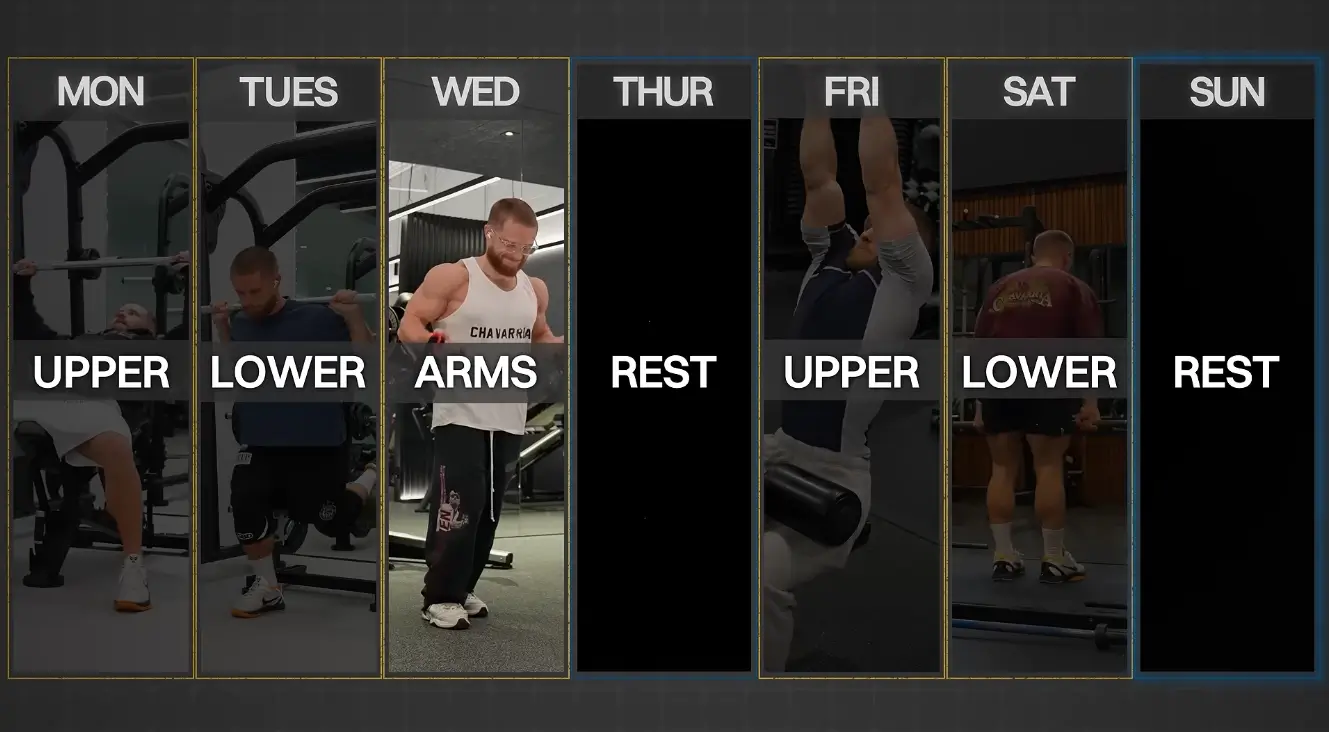
Jeff designed a program he called Min-Max — minimum volume, maximum intensity. He released it as a purchasable program, but the core structure was shown in the video. Here's the exact split both brothers followed:
Weekly Split
| Day | Focus | Key Exercises | Duration |
|---|---|---|---|
| Monday | Upper Body A | Bench Press, Rows, OHP, Pulldowns | ~50 min |
| Tuesday | Lower Body A | Squats, RDLs, Leg Press, Calves | ~55 min |
| Wednesday | Rest / Active Recovery | Light Walk (8K+ steps) | — |
| Thursday | Upper Body B | Incline DB Press, Cable Rows, Lateral Raises | ~50 min |
| Friday | Lower Body B | Hack Squat, Leg Curl, Lunges, Calves | ~55 min |
| Saturday | Arms & Delts | Curls, Pushdowns, Rear Delt Flyes | ~45 min |
| Sunday | Full Rest | — | — |
The Non-Negotiable Rules
- 1–2 working sets per exercise (after 2–3 warm-up sets). That's it. No "back-off" sets. No "feeder" sets. One or two all-out sets, then you move on.
- Every working set to complete failure — no leaving reps in reserve. Jeff described it as "nailing execution and effort" on every single set. If you could do one more rep with good form, you didn't go far enough.
- Progressive overload tracked weekly — add weight or reps every session. Jeff logged every number. "I did 5 reps with five plates two weeks ago, 7 reps with five plates this week," he reported mid-challenge.
- ~6 total sets per muscle per week — roughly half the conventional recommendation of 10–20.
- Cardio: 2 low-intensity sessions (30 min walking or cycling) + 8,000–10,000 daily steps. No HIIT. No running. Low-impact only, to preserve recovery for lifting.
Why This Works (The Science)
The key insight is that muscle protein synthesis (MPS) is triggered by mechanical tension, not by the number of sets. A single set taken to true failure recruits virtually all available motor units — including the high-threshold Type II fibers that drive hypertrophy. Additional sets beyond that point produce diminishing MPS returns while accumulating disproportionate central and peripheral fatigue.
In a calorie deficit, your recovery capacity is already compromised by ~20–30%. Glycogen stores are lower. Cortisol is elevated. Sleep quality may suffer. By cutting volume in half but maximizing intensity, Jeff reduced the fatigue debt without proportionally reducing the growth stimulus — the exact trade-off a cutting lifter needs.
Jeff noted something unexpected: knowing he only had 1–2 sets to get the job done made him focus harder than he ever had with 4–5 sets. "It's so insane how much better you lock in when you only have 2 sets to do," he said. The constraint became a feature, not a bug. This aligns with research on attentional focus (Wulf, 2013) — when you know the window is narrow, your brain allocates more cognitive resources to the task. Fewer sets = more presence per set = better motor unit recruitment.
Mid-Challenge Adjustment: Toronto Film Festival
When Brad traveled for the Toronto International Film Festival (he works as a filmmaker), the brothers temporarily switched to a full-body split — 3 sessions per week hitting every muscle group — to accommodate a less predictable schedule. This flexibility — adjusting structure without abandoning principles — was a key factor in maintaining zero missed workouts across the entire 100+ days. The lesson: the program serves you, not the other way around.
04The Nutrition Plan: 1,800 Calories, Refeeds & the Diet Break
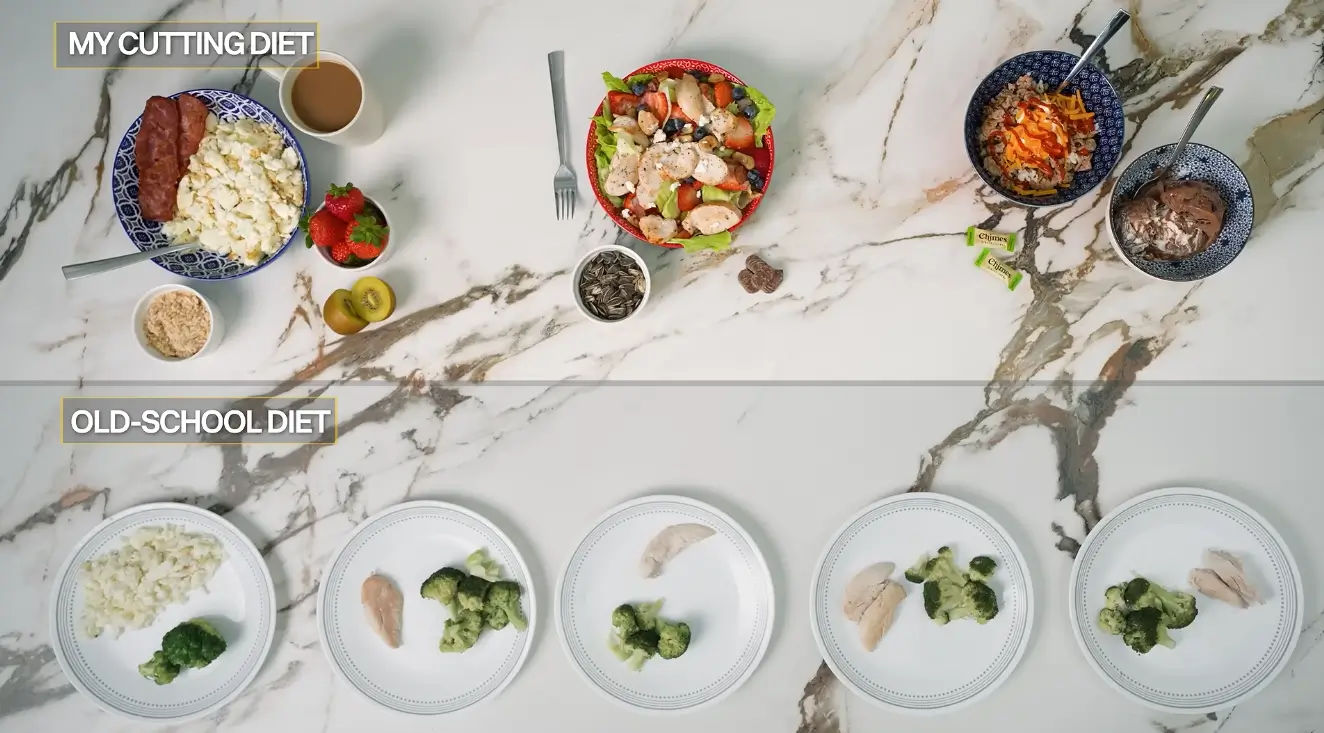
Nutrition was tracked using the MacroFactor app, which adjusts targets dynamically based on weekly weigh-in trends — a significant upgrade over static calorie counting because it accounts for individual metabolic variation.
Daily Targets
| Parameter | Jeff | Brad |
|---|---|---|
| Daily Calories | 1,800 kcal | 1,800 kcal |
| Maintenance (est.) | ~2,200 kcal | ~2,200 kcal |
| Deficit | ~400 kcal/day | ~400 kcal/day |
| Protein | ~170 g (2.3 g/kg) | ~160 g (2.3 g/kg) |
| Refeed Days | 2×/week at 2,200 kcal | 2×/week at 2,200 kcal |
| Meal Structure | 3 large meals | IF: 5-hour window (5–10 PM) |
| Tracking Tool | MacroFactor | MacroFactor |
Strategic Choices — And Why They Matter
Jeff's Switch: 6 Small Meals → 3 Large Meals
For years, Jeff ate 5–6 small meals daily — the classic bodybuilder approach. For this cut, he switched to 3 larger meals. The research supports this: a 2019 study in Obesity found that fewer, larger meals improve subjective satiety during caloric restriction. "I felt less hungry eating three big meals than I ever did grazing on six small ones," Jeff reported. This echoes the principles we explored in our OMAD vs. 16:8 comparison — meal frequency matters less than total intake, but subjective satisfaction drives adherence.
Brad's Intermittent Fasting Window
Brad used a 5-hour eating window (5 PM to 10 PM), which simplified his schedule and helped manage evening hunger. This wasn't a magic metabolic hack — it was a behavioral tool that made compliance easier for his specific lifestyle as a filmmaker with irregular hours.
Refeed Days: The Science
Two refeed days per week at maintenance calories (2,200) served three evidence-backed purposes:
- Glycogen restoration: Muscle glycogen depletes during a deficit, reducing training volume and muscle fullness. Refeeds replenish it.
- Leptin rescue: Caloric restriction suppresses leptin (the satiety hormone), increasing hunger and reducing metabolic rate. A temporary caloric bump partially restores leptin levels (Dirks & Leeuwenburgh, 2006).
- Psychological relief: Knowing a "normal" eating day is 48 hours away makes the deficit feel less punitive.
Around Day 33, Jeff's DEXA scan flagged a small but concerning drop in lean mass. He immediately implemented a 2-week diet break (extended to 3 weeks due to travel), returning to maintenance calories with elevated carbohydrates. This paused fat loss but restored training performance, muscle fullness, and hormonal balance. The lesson: planned diet breaks aren't failure — they're a tool. If you're planning your own deficit, our free Ileany Calorie Calculator can help you set realistic targets before you start.
05Week-by-Week: What Actually Happened
One of the most valuable aspects of this video was Jeff's transparency about the process, not just the outcome. Here's the chronological breakdown:
Jeff admitted feeling like he "wasn't doing enough." After 18 years of high-volume training, 1–2 sets per exercise felt wrong. Brad struggled with the intensity requirement — going to true failure was physically and mentally uncomfortable. Both questioned whether the protocol would work.
Jeff noticed something surprising: he looked "harder and fuller" than before. Less residual inflammation from lower volume meant his muscles presented at their true size. Brad hit his first pull-up PR (5 reps, up from 3). Confidence started building.
Both brothers were losing weight at ~1 lb/week. Jeff's bench held at 330 lbs. Brad's strength was climbing rapidly (beginner gains). The 3-meal structure was working for Jeff; Brad's IF window felt natural. Zero missed workouts.
Jeff's mid-challenge DEXA showed a small lean mass drop. He called an audible: 2-week diet break at maintenance calories. This was the most important decision of the entire experiment — it prioritized long-term muscle preservation over short-term fat loss speed.
Diet break extended to 3 weeks due to Brad's travel for TIFF. They switched to a full-body split. Jeff used the extra calories to push strength: "7 reps with five plates this week, up from 5 two weeks ago." Brad maintained habits on the road — a sign of genuine behavioral change.
Back in deficit. Jeff's vascularity and separation became visible. Brad's midsection fat was noticeably reduced. Both reported improved energy and mood. Jeff's psychological assessment showed improved body image with zero disordered eating patterns.
The "100 days" extended to ~122 due to the diet break and travel. Jeff continued pushing toward 9%. Brad continued losing at a steady pace. Final testing was conducted at the extended endpoint.
The week-by-week data reveals something the highlight reel doesn't: the most important moment wasn't the final reveal — it was the Day 33 diet break. That's where Jeff's scientific training overrode his ego. Most people in a deficit, seeing the scale stall, would push harder. Jeff looked at the DEXA data, saw the lean mass trend, and added calories. That decision likely saved 2–3 pounds of muscle. It's the single most replicable lesson in this entire experiment.
06The Results: DEXA Data, Strength & Bloodwork

Jeff Nippard — Final Results
| Metric | Day 1 | Day 100+ | Change |
|---|---|---|---|
| Body Fat % (DEXA) | 11.9% | 9.0% | −2.9% ✅ |
| Fat Mass | 19.4 lbs | 13.9 lbs | −5.5 lbs |
| Lean Mass | 136.0 lbs | 134.2 lbs | −1.8 lbs (within DEXA error) |
| Smith Bench Press | 330 lbs | 330 lbs | Maintained |
| Leg Extension | 145 lbs | 160 lbs | +15 lbs ↑ |
| Testosterone | Baseline | −21% | ↓ (expected at 9%) |
| Cortisol | Baseline | Slight decrease | Within normal range |
| Ultrasound (Quad) | Baseline | Maintained | No thickness loss |
| Psych Assessment | Baseline | Improved body image | No disordered eating ✅ |
Brad Nippard — Final Results
| Metric | Day 1 | Day 100+ | Change |
|---|---|---|---|
| Body Fat % | 30.5% | ~26% | −4.5% ✅ |
| Body Weight | 156 lbs | ~147 lbs | −9 lbs |
| Lean Mass | Baseline | +10.1 lbs | Muscle gained ↑ |
| Pull-ups | 3 reps | 8 reps | Personal record |
| Fasting Glucose | Pre-diabetic | Normal range | Reversed ✅ |
| Testosterone | Low-normal | Increased | ↑ (fat loss effect) |
| Social Function | Months of isolation | Working, traveling, socializing | Transformed ✅ |
Brad lost fat and gained 10.1 pounds of muscle simultaneously — a textbook body recomposition. This is possible because he was a beginner with elevated body fat, giving his muscles a strong growth stimulus from training while his fat stores provided ample energy. His pre-diabetic markers also normalized, demonstrating that even modest fat loss (5–10% of body weight) can produce meaningful metabolic improvements. For the protein strategy that supports this kind of recomposition, see our Whey vs. Plant Protein deep-dive.
07The Psychology: Mindset, Anxiety & the Hidden Transformation
This is the section most fitness coverage skips, and it's arguably the most important.
Brad's Mental Health Arc
Brad entered the challenge after months of social isolation. He described severe social anxiety, low confidence, and a sedentary lifestyle that had compounded both. The 100-day challenge wasn't just a physical intervention — it was a behavioral activation protocol, the same therapeutic approach used in cognitive behavioral therapy for depression and anxiety.
By the end of the challenge, Brad was:
- Working as a filmmaker on set (previously impossible due to anxiety)
- Traveling to the Toronto International Film Festival
- Training consistently with his brother (zero missed sessions)
- Reporting improved mood, energy, and self-image
- Maintaining habits independently during travel
Jeff's Psychological Assessment
Jeff underwent a standardized psychological assessment at both endpoints. The results showed:
- Improved body image — despite being leaner, he reported feeling more satisfied, not less
- Zero disordered eating patterns — no obsessive calorie counting, no food anxiety, no binge-restrict cycles
- Sustainable relationship with training — the low-volume approach reduced the "dread" factor of long sessions
Jeff's willingness to include psychological assessment in a fitness video is genuinely rare and genuinely important. The fitness industry has a well-documented problem with orthorexia, exercise addiction, and body dysmorphia. By showing that his approach produced improved psychological outcomes — not just physical ones — Jeff modeled what responsible fitness content looks like. We wish more creators would do this.
08Critical Analysis: What the Data Actually Proves
Here's where we put on our editorial hat and separate what the data shows from what the narrative implies.
8.1 Low Volume + Max Intensity = Sufficient Stimulus (Supported ✅)
The relationship between training volume and muscle growth follows a logarithmic curve, not a linear one. Research by Schoenfeld, Krieger, and colleagues (2017, 2019) consistently shows that the first 5–8 hard sets capture the vast majority of the hypertrophic signal. Jeff's 1.8 lb lean mass loss is within DEXA's margin of error (±1–2%), meaning he effectively maintained all 18 years of muscle on half the volume. Our assessment: This is the strongest finding of the experiment.
8.2 Body Recomposition Is Real — For the Right Person (Supported, with caveats ⚠️)
Brad's simultaneous fat loss and muscle gain is well-documented physiology. A 2020 meta-analysis by Barakat et al. (Sports Medicine) confirmed that body recomposition occurs reliably in untrained individuals with higher body fat who consume adequate protein and follow progressive resistance training. Our assessment: Real but not generalizable to trained lifters. If you've been training consistently for 2+ years, plan for retention, not growth.
8.3 The Hormonal Picture (Important nuance 🔬)
Jeff's 21% testosterone drop at 9% body fat is consistent with the literature. The hypothalamic-pituitary-gonadal axis interprets very low energy availability as a survival threat. Brad's testosterone increased as he lost fat — excess adipose tissue converts testosterone to estrogen via aromatase. Our assessment: Single-digit body fat is a competition condition, not a lifestyle condition. For most men, 12–18% is the sustainable sweet spot.
8.4 The Sleep Factor (Under-emphasized ⚠️)
Brad was sleeping only 4–5 hours per night. Sleep deprivation impairs insulin sensitivity by 25–30% (Spiegel et al., Lancet, 1999), elevates ghrelin, suppresses leptin, and reduces muscle protein synthesis. Our assessment: This is the experiment's biggest "what if." Brad succeeded despite poor sleep, not because of the program's completeness.
8.5 The Creatine Question 💊
Neither brother's supplement protocol was detailed extensively in the video, but for anyone replicating this approach, creatine monohydrate (5 g/day) is the single most evidence-backed supplement for maintaining strength and lean mass during a cut. It also supports cognitive function — relevant when caloric restriction causes brain fog.
09Our Honest Verdict: Strengths, Weaknesses & Blind Spots
What Jeff Got Right ✅
- Measurement rigor. DEXA + ultrasound + bloodwork + strength tests + psychological assessment is more thorough than most published studies.
- Moderate deficit. 400 calories is conservative and sustainable. Aggressive deficits (800+) accelerate muscle loss.
- Protein prioritization. 2.3 g/kg is at the upper end of evidence-based recommendations — exactly right for a cut.
- Refeed days. Two per week is well-calibrated for glycogen restoration and psychological relief.
- The Day 33 diet break. The single best decision in the experiment. Data over ego.
- Accountability structure. Two brothers, zero missed workouts. Social commitment outperforms willpower.
- Flexibility. The Toronto adjustment proved the system adapts without breaking.
- Psychological transparency. Including mental health data in a fitness video is rare and responsible.
What Deserves Scrutiny ⚠️
- Sample size = 2. No statistical generalization is possible. These are two brothers with shared genetics.
- Designer-participant bias. Jeff designed the program he then tested on himself. Blinding is impossible.
- No control group. We don't know how Jeff's results compare to a traditional 15-set/week protocol under identical conditions.
- The "100 days" is marketing. Actual duration was ~122 days, with a 3-week diet break embedded.
- Extraordinary motivation. A camera crew, a YouTube audience, and sibling accountability create conditions most people can't replicate.
- Sleep was identified but not fixed. Brad's 4–5 hour sleep was a known limiter, yet no sleep intervention was implemented.
- Brad didn't hit his target. The stated goal was <19% body fat. He finished at ~26%. Impressive progress, but the framing is generous.
The Blind Spots 🔍
- Long-term sustainability. What happened at Day 150? Day 200? Transformation videos rarely show the maintenance phase — where most people fail.
- Psychological depth. Brad's social anxiety was mentioned briefly and never followed up with clinical context. The mental health transformation may be more significant than the physical one.
- Cost of intensity. Training to failure on every set, every workout, for 100+ days carries injury risk that wasn't discussed. For lifters over 35 or those with joint history, this approach needs modification.
- Financial accessibility. DEXA scans, MacroFactor, and the Min-Max program aren't free. The "just do what I did" framing glosses over the infrastructure that made the experiment possible.
This is one of the better-designed self-experiments we've seen in YouTube fitness content. The measurement rigor is genuinely impressive, and the core finding — that low-volume, high-intensity training preserves muscle in a deficit — is well-supported by the literature. But it's a case study of two people, not a universal protocol. The results are real, the narrative is slightly oversold, and the sleep gap is the elephant in the room. We rate it as informative and inspiring, but not prescriptive. Take the principles. Adjust the parameters. Fix your sleep.
10The Supplement & Gear Stack That Supports a Cut
While the Nippards' results came primarily from training and nutrition discipline, a targeted supplement stack can support recovery, muscle retention, and overall health during a deficit. Here are the categories that matter most — with specific picks from our tested product database, each with a real image and a clear "why this, why now."
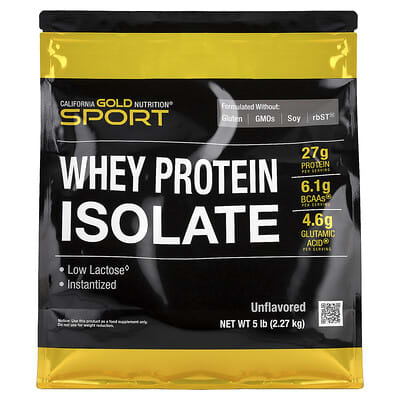
California Gold Nutrition, Sport Whey Protein Isolate
Hitting 170 g of protein daily on 1,800 calories is tough with whole foods alone. A clean whey isolate (27 g protein, <1 g fat, <2 g carbs per scoop) fills the gap without blowing your calorie budget. Jeff's 3-meal structure included one protein shake daily to guarantee his target. For the full science on whey vs. plant protein for muscle retention, see our head-to-head comparison.
View on iHerb ➔
California Gold Nutrition, Sport Pure Creatine Monohydrate
The single most evidence-backed supplement for maintaining strength and lean mass during a cut. 5 g/day supports phosphocreatine stores, buffers fatigue during those all-out failure sets, and — as emerging research shows — supports cognitive function when caloric restriction causes brain fog. Jeff's bench press held at 330 lbs; creatine is part of why. Full breakdown in our Creatine Guide.
View on iHerb ➔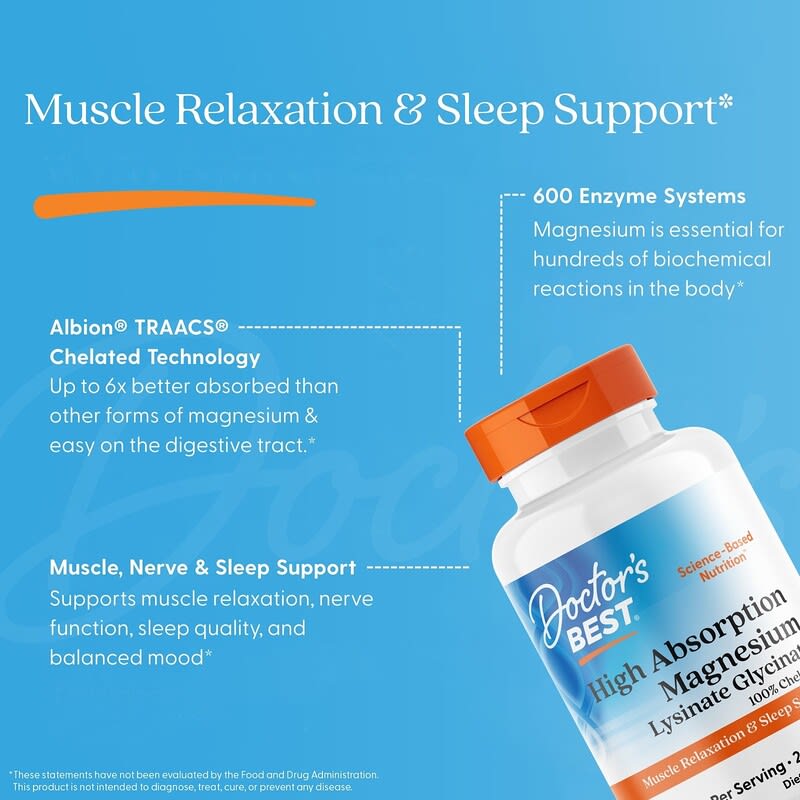
Doctor's Best, High Absorption Magnesium Lysinate Glycinate
Brad's 4–5 hour sleep was his biggest limiter. Magnesium glycinate (200–400 mg elemental Mg, 60–90 min before bed) supports GABA signaling, reduces muscle tension, and improves sleep quality — all critical when training to failure in a deficit. Also supports 300+ enzymatic reactions for recovery. Albion TRAACS chelated form = no laxative effect, unlike oxide or citrate. This is the one supplement we'd add to any cutting protocol.
View on iHerb ➔
California Gold Nutrition, Omega-3 Premium Fish Oil
Training to failure 4× per week in a calorie deficit creates systemic inflammation. EPA and DHA (aim for 2–3 g combined daily) help modulate the inflammatory response, support joint health, and may preserve muscle protein synthesis during caloric restriction. Take with your largest meal for optimal absorption. If you need a higher concentration, the CGN Omega 800 Ultra-Concentrated delivers more EPA/DHA per softgel.
View on iHerb ➔
Etekcity Food Kitchen Scale
Both brothers tracked macros daily using MacroFactor. But the app is only as accurate as your measurements. A $15 kitchen scale eliminates the "eyeball" error that can add 200+ hidden calories per day. Weigh your protein, your rice, your peanut butter. In a 400-calorie deficit, precision isn't optional — it's the difference between losing fat and losing muscle. Supports 5 units, tare function, batteries included.
View on Amazon ➔
LMNT Zero Sugar Electrolytes
On a calorie deficit with high protein and regular training, electrolyte balance becomes critical. Sodium, potassium, and magnesium are lost through sweat and depleted by caloric restriction. LMNT provides a clean, zero-sugar electrolyte matrix that supports training performance and prevents the headaches, cramps, and fatigue that derail cuts. Especially useful during Brad's intermittent fasting window, when electrolyte intake from food is compressed.
View on Amazon ➔
Ninja Air Fryer with Air Crisp
When you're eating 3 meals at specific macros, cooking method matters. An air fryer lets you get crispy chicken breast, salmon, or sweet potato fries with a spray of oil instead of a pour — saving 100–200 calories per meal without sacrificing satisfaction. Jeff's shift to 3 larger meals made batch cooking essential, and this was the workhorse. 4-in-1 functionality, 400°F superheated air, little to no oil needed.
View on Amazon ➔
Under Armour 1 Gallon Water Bottle
On 1,800 calories with high protein, you need consistent hydration for kidney function, nutrient transport, and workout performance. A marked 1-gallon bottle removes the guesswork. Fill it in the morning, finish it by dinner. Brad's intermittent fasting window made this especially important — all hydration had to be intentional. Durable, BPA-free, dishwasher safe.
View on Amazon ➔Tier 1 (non-negotiable): Protein powder to hit targets, creatine for strength retention, magnesium for sleep/recovery.
Tier 2 (strongly recommended): Omega-3 for inflammation, kitchen scale for accuracy, electrolytes for hydration.
Tier 3 (quality of life): Air fryer for low-cal cooking, marked water bottle for hydration.
Everything else — fat burners, BCAAs, test boosters — is noise. The Nippards' results came from training intensity, caloric discipline, and sleep, not from a supplement shelf.
🎯 Planning Your Own Cut?
Before you set a single calorie target, know your numbers. Our free calculator gives you personalized maintenance calories, protein targets, and deficit recommendations based on your stats and activity level — the same framework Jeff used with MacroFactor, simplified.
Try Ileany Calorie Calculator Now 🎯11Practical Recommendations: Build Your Own Cut
If You're an Advanced Lifter (Like Jeff)
- Reduce volume to 6–8 sets per muscle per week. You don't need 15+ sets to maintain muscle in a deficit.
- Push every working set to failure or RPE 9–10. Intensity is the non-negotiable trade-off.
- Keep your deficit moderate: 300–500 calories below maintenance. Aggressive deficits accelerate muscle loss.
- Protein at 2.2–2.6 g/kg body weight. Higher than bulking recommendations — protein needs increase in a deficit.
- Plan a diet break every 6–8 weeks (1–2 weeks at maintenance). It protects performance, hormones, and sanity.
- Don't chase single-digit body fat year-round. Jeff's 21% testosterone drop is a warning, not a badge of honor.
- Track strength, not just weight. If your bench holds and your leg extension climbs, you're retaining muscle regardless of scale fluctuations.
If You're a Beginner with Higher Body Fat (Like Brad)
- You can build muscle and lose fat simultaneously. Don't let anyone tell you otherwise — the research is clear.
- A small deficit (200–300 calories) is enough. Your fat stores are the energy surplus your muscles need.
- Focus on progressive overload above all. Add weight or reps every session. That's the growth signal.
- Give yourself 6+ months. Brad's transformation wasn't a 100-day miracle — it was the continuation of a year-long process.
- Fix your sleep before optimizing anything else. 4–5 hours will sabotage every other variable. Aim for 7–8 hours.
- Don't skip the psychological work. Brad's social isolation was as dangerous as his pre-diabetes. Movement, community, and purpose are medicine.
The Universal Rules (Both Groups)
| Principle | Why It Matters | How to Implement |
|---|---|---|
| Accountability partner | Jeff and Brad missed zero workouts | Train with a friend, hire a coach, or post progress publicly |
| Objective measurement | The mirror lies; data doesn't | Weekly weigh-ins, monthly photos, quarterly strength tests |
| Flexibility within structure | The Toronto switch proved adaptability | Have a "travel plan" and a "bad week plan" ready |
| Enjoy the process | Sustainability beats perfection | Choose exercises you like; choose meals you enjoy |
| Sleep is non-negotiable | Brad's 4–5 hours was his biggest limiter | Set a bedtime alarm. Yes, really. |
| Diet breaks are tools | Jeff's Day 33 break saved muscle | Every 6–8 weeks, eat at maintenance for 7–14 days |
12FAQ, Final Score & Full Credit to Jeff Nippard
How much fat did Jeff Nippard lose in 100 days?
Jeff lost 5.5 pounds of fat, dropping from 11.9% to 9.0% body fat (DEXA-verified), while retaining nearly all his lean mass (136.0 → 134.2 lbs) and even increasing leg extension strength by 15 lbs.
Can you build muscle while losing fat in a calorie deficit?
Yes — primarily for beginners or those with higher body fat. Brad gained 10.1 lbs of lean mass while dropping from 30.5% to ~26% body fat. Advanced lifters in a deficit should focus on retention, not growth.
Is low-volume training effective for muscle retention during a cut?
Yes. Approximately 6 sets per muscle per week, taken to complete failure, was sufficient to retain 18 years of drug-free muscle mass during a 400-calorie deficit. This aligns with the diminishing-returns model of training volume.
What calorie deficit did they use?
Both ate 1,800 calories daily with two refeed days per week at 2,200 calories, creating an average deficit of ~400 calories below their estimated maintenance of ~2,200.
Is 9% body fat healthy long-term?
For most men, no. Jeff's testosterone dropped 21% at 9%. Single-digit body fat is a competition condition, not a sustainable lifestyle. A healthy, maintainable range for most men is 12–18%.
What is the Min-Max training program?
Min-Max is Jeff Nippard's low-volume, high-intensity training split: 4 days per week (Upper/Lower/Upper/Lower) plus an arms and delts day, with only 1–2 working sets per exercise taken to complete muscular failure, totaling approximately 6 sets per muscle per week.
What was the biggest surprise of the experiment?
Jeff expected to feel undertrained. Instead, by week 3, he reported looking "harder and fuller" than before — likely because reduced volume meant less residual inflammation and better recovery, allowing muscles to present at their true size.
Did Brad reach his goal of 19% body fat?
No. Brad finished at approximately 26%, not the sub-19% target. However, he lost 9 lbs total weight, gained 10.1 lbs of lean mass, reversed his pre-diabetic markers, and transformed his mental health. The "missed" target obscures a genuinely remarkable transformation.
The Final Score
Ileany Case Study Scorecard
This case study confirms three evidence-backed principles:
- Less ≠ worse. Six sets to failure can preserve muscle built over 18 years — if the intensity is genuinely maximal.
- Beginner + deficit + protein = recomposition. Brad lost fat and gained 10 pounds of muscle simultaneously. This is physiology, not luck.
- Sustainability beats perfection. Forty-five enjoyable sessions per week outperform ninety miserable ones that most people quit by week four.
Give yourself 100 days. Even if you don't reach your ideal physique in that window, you will build the habits that make the next 100 days — and the 100 after that — compound in your favor.
📺 Full Credit & Source Attribution
This case study is based entirely and exclusively on the video "How Ripped Can I Get My Brother In 100 Days?" published by Jeff Nippard on YouTube (July 2026, 37:40 runtime). Every data point in this article — the DEXA scans, ultrasound measurements, bloodwork panels, strength tests, psychological assessments, training protocols, nutrition targets, and week-by-week progress updates — was collected, designed, executed, and presented by Jeff Nippard and his team.
Jeff Nippard is a natural professional bodybuilder (WNBF), a biochemistry graduate from the University of British Columbia, and one of the most evidence-based voices in fitness content creation. With over 5 million YouTube subscribers and 18 years of drug-free training experience, he has built a reputation for translating peer-reviewed research into practical protocols — and for subjecting his own training to the same objective scrutiny he applies to the literature.
His willingness to share the full picture — including the 21% testosterone drop, the missed target for Brad, the diet break that paused progress, and the psychological assessments — sets a standard of transparency that few creators in any field match. This case study exists because Jeff did the hard work first. We simply analyzed it.
All credit for the experiment, the data, and the results belongs to Jeff Nippard. Any analytical errors, editorial opinions, or critical assessments in this article are solely the responsibility of the Ileany editorial team.
References: Nippard J. "How Ripped Can I Get My Brother In 100 Days?" YouTube, July 2026 · Schoenfeld BJ et al. J Strength Cond Res. 2017;31(12):3508–3512 · Barakat C et al. Sports Med. 2020;50(10):1765–1784 · Spiegel K et al. Lancet. 1999;354:1435–1439 · Helms ER et al. J Int Soc Sports Nutr. 2014;11:20 · Dirks ML & Leeuwenburgh C. Ageing Res Rev. 2006;5(1):22–38 · Wulf G. Int Rev Sport Exerc Psychol. 2013;6(1):1–36 · American Academy of Sleep Medicine. Clinical Practice Guidelines, 2021 (reaffirmed 2025).
Comments
Post a Comment