
How to Help Someone with Bipolar Disorder: A Family Caregiver's Honest Guide
You love someone whose brain sometimes lies to them — and to you. This guide is for the partners, parents, siblings, and friends who want to help without burning out, without making it worse, and without losing themselves in the process.

The most powerful thing you can offer isn't a fix. It's a steady, informed, non-judgmental presence — and that takes real skill, and real care for yourself too.
📋 What's inside
- First: this is hard, and you matter too
- A quick refresher on what you're actually supporting
- Learn THEIR early warning signs (not the textbook ones)
- Protect the rhythm together — don't police the person
- What to say (and not say) during an episode
- Build a written crisis plan in peacetime
- The medication & supplement minefield a caregiver should know
- Caregiver burnout is real — protect yourself
- FAQ
If you found this page, you're probably not the one with the diagnosis. You're the one standing next to it — the partner who lay awake at 3 AM listening for the sound of typing that means a manic night has started, the parent who doesn't know whether to call the doctor or wait it out, the sibling who got snapped at by someone who would never normally speak that way, the friend who wants to help but is terrified of saying the wrong thing.
Whatever seat you're in: the fact that you're here, trying to understand, already makes you a better support than most. So take a breath. You don't have to be perfect at this. You just have to be informed, present, and — this is the part everyone forgets — okay yourself.
Loving someone with bipolar disorder is one of the most demanding forms of love there is. It asks you to hold two truths at once: that the person you love is not their illness, and that the illness is real and can do real damage. It asks you to set boundaries without withdrawing love. It asks you to stay calm when everything inside you is alarmed. And it asks you to keep living your own life while you do all of that.
This guide won't give you a script that works every time — no honest guide can, because every person and every episode is different. But it will give you something better than a script: a way of thinking about your role, the specific skills that research says actually reduce relapse, and permission to take care of the person holding all of this together. That's you.
01First: this is hard, and you matter too
We're starting here on purpose, because almost every caregiver guide buries this at the end as an afterthought, and that's exactly backwards. You cannot pour from an empty, frightened, sleepless, resentful cup — and the people who love someone with bipolar disorder very often end up empty, frightened, sleepless, and quietly resentful, then feel guilty about it on top of everything else.
So let's name a few things that are true and that you're allowed to feel:
- It's okay to grieve. You may be grieving the version of your relationship you expected, or the person you thought they were before the diagnosis, or the future you'd pictured. That grief is real and it doesn't mean you love them less.
- It's okay to be scared. Watching someone you love lose contact with reality, or sink into a depression you can't reach, is genuinely frightening. Your fear is a rational response to a hard situation.
- It's okay to be angry — at the illness, at the unfairness of it, sometimes even (in a fleeting, human way) at them. Anger at a disease is not the same as anger at a person, and feeling it doesn't make you a bad partner or parent or friend.
- It's okay to need a break. Wanting space is not abandonment. It's maintenance.
Hold that as we go. Everything below — the warning signs, the communication tools, the crisis plan — works better when you're not running on fumes, not worse. Your wellbeing is not a sidebar to this story. It's load-bearing.
02A quick refresher on what you're actually supporting

Between episodes, most people with bipolar disorder are fully themselves. The goal of all your effort is to protect and lengthen that middle.
You don't need a medical degree to be a great caregiver, but a clear, simple picture of the condition changes everything about how you respond in the moment. If you want the full deep-dive, our companion guide Bipolar Disorder in 2026 covers the science, the treatments, and the sleep connection in detail. Here's the caregiver's working version.
Bipolar disorder is a biological mood disorder — driven by genetics, brain chemistry, and a notably sensitive internal body clock — that involves swings between elevated states (mania or hypomania) and, for most people, depressive states. It is not a personality flaw, not "moodiness," and not something anyone can simply choose out of. The person you love is not doing this to you, even when it feels personal. That distinction is the foundation everything else rests on.
| State | What you might see from the outside | What it often feels like from the inside |
|---|---|---|
| Mania | Little or no sleep, fast/loud speech, grand plans, spending, irritability, risky behavior, sometimes paranoia | Electric, invincible, "finally awake" — then frighteningly out of control |
| Hypomania | More energy, charm, productivity, less sleep — often looks like their "best self" | Wonderful, which is exactly why it's hard to flag as a problem |
| Depression | Withdrawal, low energy, hopelessness, missed obligations, sometimes suicidal thoughts | Heavy, empty, pointless — a place words can't easily reach |
| Stable / well | Their usual self: humor, warmth, competence, quirks | Relief, and sometimes fear of the next swing |
03Learn THEIR early warning signs (not the textbook ones)
The textbook list of mania symptoms is fine, but it's almost useless in real life, because by the time someone matches the textbook, you're already in a crisis. The real superpower of a caregiver is catching the whisper before the shout — the tiny, personal, easy-to-miss shifts that happen days or even a week before a full episode. And here's the crucial part: those signs are individual. Your person's tells are not the same as the next person's.
So the single most valuable conversation you can have is one you have when they're well, calmly and collaboratively, with a notebook in hand:
Some common early signs people report (yours may differ entirely):
- Toward mania: sleeping a little less and not minding, talking a touch faster, starting more projects, a sharper or more impatient edge, more texting/spending, a sense that things are "speeding up," less interest in food, more sensitivity to light or sound.
- Toward depression: withdrawing from a usual activity, a flatter voice, skipping a routine they normally keep, more time in bed, cancelling plans, a particular kind of silence, losing interest in something they usually love.
The reason you write these down together is that, mid-episode, the person may have no insight — they genuinely cannot see the shift, especially in hypomania, which feels good. A pre-agreed list turns "you're acting weird" (which lands as an attack) into "we agreed that less sleep plus three new projects is our yellow flag, remember?" (which lands as teamwork). You're not diagnosing them in the moment; you're reading a map the two of you drew together in calm weather.
04Protect the rhythm together — don't police the person

A shared walk at the same time each day does more for stability than a lecture ever could. Rhythm is medicine — and it's something you can build side by side.
If you read nothing else about bipolar disorder, read this: sleep loss is one of the most powerful triggers of mania there is. A single badly disrupted night can be enough to tip a vulnerable brain toward an episode. An irregular body clock — late nights, shifting meal times, chaotic days — does the same thing more slowly. This isn't a lifestyle preference; it's a core part of the condition's biology, and protecting a regular rhythm is recognized as a frontline treatment strategy (it's the backbone of a therapy called IPSRT, Interpersonal and Social Rhythm Therapy).
Now here's where caregivers often go wrong with the very best intentions. They hear "protect their sleep and routine" and they become the sleep police — hovering, checking, nagging, "did you go to bed? did you take it? why are you still up?" And that almost always backfires, because it makes the person feel monitored and infantilized, which breeds resentment and secrecy, which is the opposite of stability.
The shift is from policing to co-regulating. You protect the rhythm by building a life that has a rhythm, together, rather than standing over them enforcing one.
- Anchor your own routine and invite them into it. "I'm making tea and winding down at 10, want to join me?" lands completely differently from "you need to be in bed." Your own steady rhythm becomes a tide they can float in.
- Make mornings easy and consistent. A regular wake time, breakfast together, a few minutes of daylight — these anchor the body clock more than almost anything. You don't have to explain the neuroscience; you just have to live it nearby.
- Reduce friction around the hard parts. If evenings are the danger zone, build a calming default: dim lights, no big conversations after a certain hour, a shared low-key activity. Make the healthy choice the easy choice.
- Watch sleep indirectly and kindly. If you share a home, you'll notice the 3 AM typing or the skipped night without interrogating them. Note it for your shared map. Bring it up gently in daylight, not as an accusation at 2 AM.
This is also where a little objective data can take the emotion out of a tense conversation. When "I feel like you haven't been sleeping" becomes a debate about perceptions, a shared look at actual sleep trends can be a neutral third voice — but only with the person's willing buy-in, never as surveillance.

WHOOP 5.0 — Sleep & Recovery Trends
If your loved one is open to it, a wearable like WHOOP turns sleep into visible, non-judgmental data — sleep stages, consistency, and recovery trends over time. That can make a gentle "your sleep's been slipping for three days, want to protect tonight together?" feel like reading a weather report instead of starting a fight. (And honestly? It's just as useful for you — caregivers quietly run a sleep deficit too, and your own recovery score is worth watching.) Used with consent and warmth, never as a monitor.
See WHOOP 5.0 on Amazon ➔And the small rituals matter as much as the big structure. A shared, caffeine-free wind-down cup in the evening is one of the gentlest ways to co-regulate — you're not telling them to calm down, you're being calm, together, and offering them a seat beside you.
The "let's wind down together" move. Keep a calming, caffeine-free ritual on hand for the evenings that feel a little too wired. Yogi Tea Bedtime® (passionflower + chamomile) and Yogi Tea Stress Relief (Honey Lavender) are gentle enough to be a nightly default, and the real medicine is the shared ten minutes of brewing and sipping in a dim room — a behavioral anchor that says "the day is done" without a single word of instruction.
05What to say (and not say) during an episode
This is the part caregivers search for at 2 AM with their heart pounding, so let's be concrete. No phrase is magic, and an episode is not a negotiation you can win with the perfect sentence. But the posture you take — calm, low-stimulation, on their side even when you disagree — changes outcomes more than the exact words.
During mania or hypomania
The instinct is to argue with the grandiosity or the paranoia, to present evidence, to reason. It almost never works, because the part of the brain that weighs evidence is exactly what's offline. Arguing also escalates arousal, and arousal feeds mania. So instead:
- Lower the volume of everything — your voice, the lights, the number of people in the room, the number of decisions being made. Mania thrives on stimulation; you want to be the quiet in the room.
- Don't validate the delusion, but validate the feeling. You don't have to agree that the FBI is watching to say "that sounds really frightening, and I'm here." You're connecting to the emotion underneath, which is real, without signing off on the story.
- Delay, don't deny, on big decisions. The new car, the quit-the-job email, the investment — "that's a big one, let's sleep on it together and look at it tomorrow" buys time without a head-on collision. Where you can, gently limit access to the means of the most dangerous impulses (cards, keys, large transfers) — ideally set up in advance, in the crisis plan.
- Don't take the cruelty personally. Mania can be mean. It can say the worst possible thing to the person it loves most, because that's the person it's safest to be ugly with. This is the illness throwing shrapnel. It is not the truth about your relationship, even when it's aimed right at your heart.
During depression
The instinct here is the opposite and equally unhelpful: cheerleading. "Come on, it's not that bad, let's go out, look on the bright side." To a depressed brain this lands as "you don't understand, and now I'm failing at being happy too." So instead:
- Offer presence, not pep talks. "I'm here. You don't have to talk. I'll just sit with you." Low-pressure company is often the most a depressed person can tolerate, and it's enormously powerful.
- Validate the pain as real. "This sounds so heavy. I believe you." You don't need to fix it; you need to witness it.
- Help with the tiny practical things. Depression makes a sink full of dishes feel like a mountain. Doing the dishes, making the meal, handling the appointment call — these quiet acts of service are love in a language a depressed brain can actually receive.
- Take any mention of self-harm or suicide seriously, every time. Don't panic, don't shame, don't promise secrecy. Stay with them, ask directly and calmly, and contact their care team or a crisis line. Asking about suicide does not put the idea in someone's head; it gives them permission to be honest about a pain they're already carrying.
✅ Tends to help
- Calm, slow, quiet voice
- "I'm on your side"
- Validating the feeling
- Offering choices, not orders
- Delaying big decisions
- Low-pressure presence
- Practical help with small tasks
- Saving big talks for stable days
❌ Tends to backfire
- Arguing with delusions / grandiosity
- "Just snap out of it / think positive"
- Lecturing or "I told you so"
- Threats, ultimatums in the moment
- Taking hurtful words personally
- Crowding, loud or busy environments
- Promising to keep suicidal thoughts secret
- Deciding they're "fine" because they look fine
06Build a written crisis plan in peacetime

The crisis plan you write on a calm Tuesday is the calm version of you, lending a hand to the panicked version of you at 3 AM.
If you take one practical action from this whole guide, make it this one. A written crisis plan — built together, while the person is well and can think clearly and give real consent — is one of the most powerful things a family can have, and one of the most neglected. The reason it matters is simple: a crisis is the worst possible time to be figuring out, from scratch, who to call, what the medications are, what the person wants, and what they agreed to. The plan moves all of that thinking to a moment when everyone can think.
Here's a skeleton you can copy into a document tonight and fill in over a calm weekend:
| Section | What to write |
|---|---|
| The person's early signs | Their specific mania and depression tells (from section 03), in their own words where possible |
| Current treatment | Every medication (name, dose, timing), psychiatrist, therapist, GP, pharmacy — with phone numbers |
| Who to call, in order | 1st, 2nd, 3rd contacts — family, then clinician, then crisis services — and when to skip straight to emergency care |
| What usually helps | Quiet, a walk, a particular person, a particular phrase, reducing stimulation, sleep |
| What usually makes it worse | Arguing, crowds, bright lights, certain topics, being told to "calm down" |
| Advance consent | What they agree to in advance if they become severely unwell (e.g., "you may call my psychiatrist," "you may take my cards for safekeeping," who may be informed) |
| Practical safety | Allergies, insurance details, dependents/pets to arrange, anything that limits medication choices |
| What "recovery" looks like | The signs that the episode is easing, so you know when to stand down and rest |
Keep copies in three places: with the person, with you, and (with consent) filed with the treatment team. Revisit it every few months and after any episode — it's a living document, not a one-time form. And consider building it inside a structured process like Family-Focused Therapy if you can access it; having a trained facilitator guide the conversation takes enormous pressure off you and produces a plan everyone actually trusts.
07The medication & supplement minefield a caregiver should know
Caregivers often end up as the household's unofficial medication manager, and that puts you on the front line of a few things worth knowing — not so you can play doctor, but so you can spot trouble and ask the right questions. Three rules cover most of it.
Rule 1: Never stop medication abruptly, and watch for the "I'm cured" moment
One of the most common and dangerous moments in bipolar disorder is when someone feels well and decides, logically and sincerely, that they no longer need their medication — because they feel fine, so the medication must be "for the sick version of me." Stopping mood stabilizers or antipsychotics suddenly can trigger a severe relapse, sometimes worse than the original episode. Your gentle, pre-agreed role here is to notice the "I think I can come off this" conversation and steer it to the psychiatrist rather than letting it become a unilateral decision. Frame it as "let's ask the person who knows the chemistry" rather than "you're wrong."
Rule 2: Keep the master list, and treat "natural" as a real ingredient
Maintain a running list of everything the person takes — prescriptions, over-the-counter, supplements, teas, powders, "wellness" gummies — and bring a photo of it to every appointment and every pharmacy visit. This matters enormously in bipolar disorder because of a specific trap:
Rule 3: Know the lithium–magnesium and other interaction flags
If the person is on lithium, be aware that magnesium, certain diuretics, NSAIDs like ibuprofen, and even big changes in salt or fluid intake can shift lithium levels toward the toxic range. None of this means "never," but it all means "the prescriber should know and may want to monitor levels." The same goes for any new supplement — including the genuinely well-evidenced ones like omega-3 — being added on. The goal isn't to forbid; it's to keep the clinical team in the loop so additions are safe and intentional.
If your loved one (or you) is drawn to herbal approaches, the Herbal Remedy Companion is a genuinely useful guide to how herbs combine and absorb — but in a bipolar household, treat it as education to bring to the pharmacist, not a green light to experiment. "Natural" and "harmless" are not the same word, and herb–drug interactions are exactly the kind of quiet risk a good caregiver learns to flag.
08Caregiver burnout is real — protect yourself

This isn't indulgence. This is the maintenance that keeps you able to show up — for them, and for your own one life.
We opened with this and we're closing with it, because it's the part most likely to get skipped, and the part that, skipped, eventually breaks everything. Caregiver burnout in bipolar disorder is its own recognized phenomenon: the chronic stress of vigilance, the sleep disruption, the walking on eggshells, the grief, the loneliness of feeling like no one else understands, and the slow erosion of your own identity into "the person who manages the person." It can look like depression, anxiety, numbness, resentment, or a quiet sense that you've disappeared.
So let's be as practical about your stability plan as we were about theirs.
- Set and keep boundaries, and let go of the guilt. A boundary is not a withdrawal of love; it's the line that lets love survive. "I love you, and I can't be in the room when you speak to me that way — I'll be back when things are calmer" is one of the healthiest sentences a caregiver can learn. It protects you, and it also doesn't reinforce the illness-driven behavior.
- Protect your own sleep and routine fiercely. You cannot be a steady co-regulator if your own rhythm is shattered. Your fixed wake time, your wind-down, your rest are not negotiable luxuries — they're the infrastructure of your ability to care.
- Keep your own people. Your friends, your siblings, your therapist, a caregiver support group (NAMI and DBSA run excellent, free ones, including family-specific groups). You need places where you can say the unvarnished truth — "I'm exhausted and sometimes I resent this" — without having to protect anyone's feelings, including theirs.
- Take real time off, without apology. An evening out, a weekend away, an hour that is purely yours. The condition will still be there when you get back; the difference is whether you are still there too, or whether you've quietly emptied out.
- Notice your own early signs. You have a baseline too. When you're sleeping badly, snapping, dreading the phone, going numb — that's your yellow flag. Treat your own warning signs with the same seriousness you'd treat theirs.
And give yourself the small, repeatable supports that lower your own baseline stress — the same gentle tools we'd recommend to anyone carrying a heavy load. They don't fix the situation, but they give your nervous system a little more margin, and margin is everything when you're the steady one in the room.
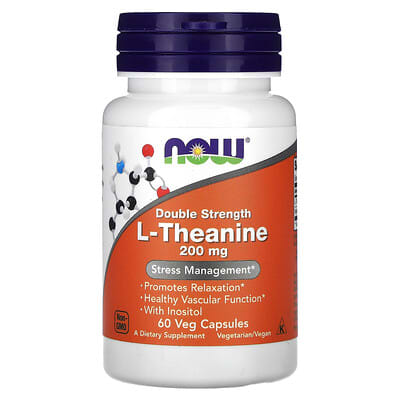
NOW Foods, L-Theanine (200 mg)
For the caregiver's own frazzled, wired, can't-switch-off moments — L-theanine (the amino acid from green tea) supports a relaxed-but-alert state without sedation, which is exactly what you need when you have to stay calm and clear-headed at 2 AM. It's a small support layer for your nervous system, not a fix for the situation — and protecting your baseline is part of the job description nobody gave you.
Shop L-Theanine on iHerb ➔The same goes for the unglamorous foundations: regular, simple meals that keep your own blood sugar (and therefore your own mood) on even ground, gentle movement that lets your body process the stress you're holding, and basic hydration that you'll forget the minute you're focused on someone else. Make them frictionless so they survive the hard weeks.
Feed the caregiver too. When you're managing someone else's meals and routines, your own eating is often the first thing to collapse into skipped meals and stress-snacking — which quietly worsens your mood and patience. The Encyclopedia of Power Foods is a handy reference for building steady, brain-supportive plates without overthinking them, on the days you have a little energy left for the kitchen.
Ten minutes that are only yours. A non-slip yoga mat by the couch removes every excuse on the days motivation is low — a short stretch or breathing session is a way to physically process the stress you've been absorbing all day. Pair it with a tracked water bottle on your desk, because the caregiver who forgets to drink water is the caregiver whose patience runs out by 4 PM.
⚡ One Less Thing to Think About: Your Own Meals on Autopilot
You're already carrying enough. Use our free calculator once to set a simple, steady macro and calorie baseline for yourself — so your own fuel runs on autopilot while your attention is where it always goes: on them.
Try Ileany Calorie Calculator Now 🎯The honest bottom line
There is no version of this where you do it perfectly. There will be nights you say the wrong thing, mornings you lose your patience, moments you don't catch the warning sign in time. That doesn't make you a bad caregiver — it makes you a human being doing one of the hardest jobs there is, without a manual, while managing your own fear and grief and exhaustion.
What you can do — and what genuinely changes outcomes, the research is clear on this — is learn their specific early signs, protect the rhythm with them rather than policing it, communicate from a calm and non-judgmental place, build a written crisis plan in peacetime, work as part of their clinical team rather than parallel to it, and consider Family-Focused Therapy if you can. Those are real levers. They reduce relapse. They shorten episodes. They save relationships.
And woven through all of it, the lever that makes every other one possible: taking care of yourself as seriously as you take care of them. Not as a reward you earn later. Not as a luxury. As the load-bearing, non-negotiable, deeply loving act that it is.
You showed up. You read this. You're trying to do right by someone you love while staying whole yourself. That is not small. That is the whole work — and you're already doing it.
Frequently asked questions
What's the single most helpful thing I can do?
Learn their specific early warning signs and build a written crisis plan together while they're well — ideally inside a process like Family-Focused Therapy. Pair that with protecting their sleep and routine in a collaborative (not policing) way, and taking care of your own mental health so you can sustain it. Those few things, done consistently, move outcomes more than almost anything else a family can do.
How do I talk to them during mania without making it worse?
Lower the stimulation (your voice, the lights, the crowd), don't argue with grandiose or paranoid ideas head-on, validate the feeling underneath without signing off on the story, delay big decisions ("let's sleep on it"), and don't take cruel words personally — that's the illness throwing shrapnel, not the truth about your relationship.
Should I remind them to take their medication?
Only in the way you agreed in advance. A blunt "did you take it?" often feels like policing and triggers defensiveness. Many families do better with a shared routine, a neutral reminder they asked for, or simply supporting the conditions that make taking meds easier. The bigger watch-out is the "I feel fine so I'll stop" moment — steer that to the psychiatrist rather than letting it become a unilateral decision.
What is Family-Focused Therapy (FFT)?
A structured, evidence-based therapy that includes the person with bipolar disorder and their family together. It teaches communication, problem-solving, and team-based early-warning-sign recognition, and multiple trials show it reduces relapse and rehospitalization. It treats the family as part of the solution — which is exactly what you are.
How do I avoid burning out?
Set and keep boundaries without guilt, protect your own sleep and routine, keep your own support network and your own therapy if you can, take real time off, and watch your own early signs of depletion. Caring for yourself isn't selfish — it's the maintenance that keeps you able to care for them. A caregiver support group (NAMI, DBSA) can be a lifeline.
What belongs in a written crisis plan?
Their early signs, current medications and doctors with numbers, who to call and in what order, what helps and what makes things worse, advance consent for severe episodes (who can be called, what can be safeguarded), practical details (allergies, insurance, dependents), and what recovery looks like so you know when to stand down. Keep copies with the person, with you, and with the treatment team.
References & further reading
- Miklowitz DJ. Family-Focused Therapy (FFT) for bipolar disorder — outcomes in relapse prevention and rehospitalization.
- American Psychiatric Association. Practice Guideline for the Treatment of Patients With Bipolar Disorder (and 2024–2026 updates).
- National Alliance on Mental Illness (NAMI) — family & caregiver resources and support groups.
- Depression and Bipolar Support Alliance (DBSA) — caregiver and family guidance.
- Frank E, et al. Interpersonal and Social Rhythm Therapy (IPSRT) — rhythm regularity as treatment.
- Harvey AG, et al. Sleep and circadian disruption as a trigger and treatment target in bipolar disorder.
- Reviews on caregiver burden and burnout in bipolar disorder; caregiver-focused interventions.
- St. John's Wort: mania/hypomania risk and CYP450 drug-interaction literature.
- Lithium: drug and supplement interactions (NSAIDs, diuretics, magnesium, sodium/fluid changes).
- Crisis and safety planning guidance — advance statements / psychiatric advance directives.
Comments
Post a Comment