
Natural Testosterone & Male Vitality Protocol for Men Over 30
Forget the "boost your T overnight" noise. Here's what actually moves the needle after 30 — ranked by real evidence — plus the daily protocol, the nutrients and herbs worth knowing, and the myths (and TRT truths) you need before you spend a dollar.
The decline is real but gentle. The story everyone skips is how much of the curve is still in your hands.
📋 What's inside
- What actually happens after 30 (normal vs. real low-T)
- The evidence ladder — what really raises testosterone
- The four lifestyle pillars (and the cortisol seesaw)
- The supporting nutrients: zinc, vitamin D, magnesium & B
- The herbs & adaptogens — honest, emerging evidence
- The daily vitality protocol (a day that works)
- The reviews: supplements worth considering
- Myths vs. facts + the TRT truth
- FAQ
Somewhere around your thirtieth birthday, an entire industry decided you should be worried about your testosterone. The ads are relentless: "Low T is stealing your energy, your drive, your edge — take this booster and get it back." And because a lot of men do feel a little less sharp, a little softer, a little more tired in their 30s and 40s than they did at 22, the message lands. Something's happening, so maybe the pill is the answer.
Here's the honest version, and it's more empowering than the marketing: yes, testosterone drifts down with age — but slowly, normally, and far less dramatically than you've been sold. And the things that move it the most aren't in a bottle at all. They're the unglamorous fundamentals — sleep, lifting heavy things, carrying less excess fat, and not living in a constant state of stress. Get those right and most men feel a bigger difference than any supplement could ever deliver. The supplements that do have evidence are mostly about filling gaps (a zinc or vitamin D deficiency) or nudging stress down — not about steroid-like transformations.
This guide is the no-BS playbook. We'll separate the normal age-related slope from genuine clinical low-T (which is a real medical condition that deserves a real diagnosis, not a checkout cart), rank every lever by the strength of its evidence, give you a daily protocol you can actually live with, review the supplements that are genuinely worth a look, and take a hard pass at the myths — including an honest word about TRT and why the "boost your T overnight" crowd is selling you a fantasy.
01What actually happens after 30 (normal vs. real low-T)
Let's ground this in reality, because the gap between "normal aging" and "a medical problem" is where both the fear and the marketing live.
The normal version: from roughly age 30, total testosterone declines at an average of about 1% per year. By your 40s and 50s you'll have less than you did at 20 — and that's expected, not a malfunction. Crucially, most men stay comfortably within the healthy reference range for decades. A 45-year-old with "lower T than he had at 22" is usually a perfectly healthy 45-year-old. The body recalibrates; it doesn't collapse.
The medical version (hypogonadism): a smaller group of men have testosterone that falls genuinely below the normal range and causes real symptoms. That's a clinical condition with real causes (testicular, pituitary, or hypothalamic), and it's legitimately treated — often with testosterone replacement therapy under supervision. The key word is diagnosed: it's established with symptoms plus low morning testosterone on repeat testing, not with a vague feeling of "I'm not 22 anymore" and not with an online quiz.
| Sign it may be worth a blood test | What a clinician typically checks |
|---|---|
| Persistently low libido or fewer morning erections | Morning total testosterone (8–10 a.m.), usually repeated on a second day |
| Erectile difficulty that's new or worsening | Free testosterone (or calculated), SHBG |
| Chronic fatigue not explained by sleep or stress | LH & FSH (to locate the cause: testicular vs. central) |
| Noticeable loss of muscle / strength despite training | Prolactin, thyroid, CBC, metabolic panel (to rule out other causes) |
| Increased body fat (especially abdominal), low mood, brain fog | A full picture — because these symptoms have many causes besides T |
02The evidence ladder — what really raises testosterone
Not all "testosterone advice" is created equal, so let's rank it honestly. The bars below represent the strength of evidence that each lever meaningfully supports healthy testosterone (or the symptoms people associate with it) in men who aren't already optimized. Notice the pattern: the strongest rungs are free, and the expensive stuff sits near the bottom.
If a supplement ad ever implies it outranks a good night's sleep, you're being sold to — not informed.
Two honest caveats about reading this ladder. First, the "moderate" nutrients are conditional: zinc, vitamin D, and magnesium support testosterone mainly when you're deficient — topping up an already-adequate level does little. Second, "emerging" doesn't mean "useless"; it means the human evidence is smaller, shorter, or more mixed, so the effects are real-but-modest and not guaranteed. We'll grade each one properly in its section.
03The four lifestyle pillars (and the cortisol seesaw)
These four are where the real leverage lives. None are sexy, all are free or cheap, and together they outperform any stack on the market. Let's take them one at a time — and then look at the mechanism (the cortisol seesaw) that ties them together.
Sleep — the undisputed #1
Most of your daily testosterone is released during sleep, especially deep sleep. Cutting sleep to 5 hours for even a week can drop daytime testosterone by ~10–15% in young men — an effect larger than many supplements claim to deliver. Aim for 7–9 hours, consistent timing, and a dark, cool room.
strongest leverLift heavy things
Resistance training — especially compound lifts (squats, deadlifts, presses, rows) at challenging loads — acutely raises testosterone and, more importantly, builds the muscle and metabolic health that support a healthy hormonal profile long-term. Progressive overload, 2–4×/week, beats endless cardio for this goal.
build the engineCarry less excess fat
Body fat — particularly visceral fat — actively converts testosterone into estrogen via the enzyme aromatase. The more excess fat you carry, the more of your testosterone gets diverted. Losing it (without crash-dieting, which can backfire) is one of the most reliable ways to raise T in overweight men.
aromatase effectTurn down the stress
Chronic stress keeps cortisol elevated, and cortisol and testosterone have a seesaw relationship — when one stays high, the other tends to fall. Sleep, training, time outdoors, breathwork, and boundaries all lower the chronic stress load that quietly suppresses your hormones.
cortisol seesawThis is why "just take a booster" misses the point: if your stress and sleep are a mess, you're fighting your own physiology every day.
Make the lifting pillar effortless at home. You don't need a gym membership to hit the resistance-training lever — a compact 5-in-1 adjustable dumbbell set (dumbbells, kettlebells, barbell, push-up stands in one) or a simple rubber hex dumbbell covers presses, rows, squats, and lunges in under two square feet of floor space. Consistency beats equipment — start with what you'll actually use.
Protect the sleep pillar like it's a supplement (it's better than one). If falling or staying asleep is your weak link, the INSOMNIAC: The Ultimate Sleep Therapy guide walks through the science of the overactive "insomniac brain" and practical steps to switch it off — a useful companion to a wind-down ritual like Yogi Bedtime® tea (passionflower + chamomile) or a low-dose melatonin for rhythm alignment. Better sleep is the highest-return "testosterone supplement" there is.
04The supporting nutrients: zinc, vitamin D, magnesium & B
These are the "fix the gaps" rungs of the ladder. The honest framing for all of them is the same: they help most when you're low, and many men are — through low intake, low sun, sweat losses from training, or stress. Correcting a real deficiency can support healthy testosterone and how you feel; megadosing an already-adequate level mostly makes expensive urine.
Zinc — the testosterone mineral
Zinc is directly involved in testosterone production, and deficiency (uncommon in meat-eaters but real in plant-heavy diets, heavy sweaters, and those with low intake) is a well-established cause of lowered testosterone that corrects with repletion. It's also central to immune function and recovery. A moderate, well-absorbed daily dose is a sensible insurance policy.
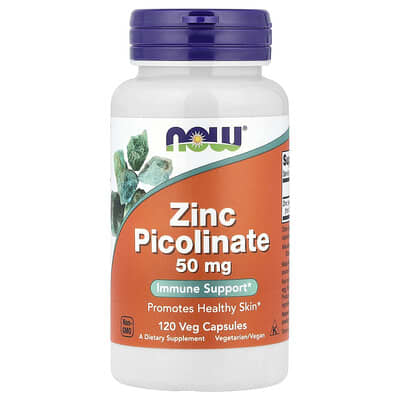
NOW Foods, Zinc Picolinate
A clean, highly bioavailable zinc in the picolinate form, at a robust once-daily dose. Zinc is the most directly testosterone-relevant mineral, and this is a simple, affordable way to close a gap if your intake (or your sweating) runs low. Take with food to avoid an empty-stomach queasy feeling.
Best for: men with low zinc intake, plant-forward diets, or heavy training/sweat losses; note: 50 mg is a full dose — if you also eat plenty of meat/shellfish, a lower-dose option or every-other-day use may be more appropriate. Long-term high zinc can deplete copper, so don't overshoot indefinitely.
Vitamin D — the hormone-like vitamin
Vitamin D acts more like a hormone than a vitamin, with receptors throughout the body including the testes. Low vitamin D is associated with lower testosterone, and repletion in deficient men has been linked to improvements. Given how common deficiency is (limited sun, northern latitudes, indoor lives), it's one of the most worthwhile levels to know and maintain — ideally with a K2 partner for calcium handling.
Know your D, then maintain it. California Gold Nutrition Vitamin D3 + K2 (MK-7) delivers 5,000 IU D3 with 120 mcg K2 — a sensible maintenance pair for adults with limited sun. If you prefer a gentler daily dose, NOW Foods Vitamin D-3 (2,000 IU) is a simple single-ingredient option. The smartest move is to test your level first and dose to a healthy range with your clinician's input.
Magnesium — the recovery mineral
Magnesium supports hundreds of reactions, including sleep quality, muscle relaxation, and stress regulation — all of which feed back into a healthy hormonal environment. Some research links magnesium to higher free testosterone, partly via its effect on SHBG, and it's depleted by stress and sweat. A gentle, well-absorbed form (glycinate) is the way to go, especially in the evening.
Evening magnesium, double duty. Doctor's Best High Absorption Magnesium (glycinate, Albion TRAACS) or Solaray Magnesium Glycinate are gentle, highly absorbable forms that support relaxation and sleep without the laxative effect of cheaper oxide/citrate. Taken in the evening, it pulls double duty: recovery mineral and sleep support — two pillars at once.
The B-vitamin backbone. Energy metabolism, methylation, and nervous-system function all lean on the B vitamins, and they matter for the "vitality" side of the equation (energy, mood, drive). Life Extension BioActive Complete B-Complex provides bioactive, methylated forms — a sensible daily base, especially if stress or a busy diet leaves gaps.
05The herbs & adaptogens — honest, emerging evidence
Now the part the supplement industry would love you to skip past the caveats. These botanicals have real research behind them — but the effects are modest, the studies are often small or short, and they work best as a complement to the pillars, not a replacement. Read them as "promising tools with conditional upside," not "natural steroids."
Ashwagandha (KSM-66) — the stress-to-testosterone bridge
Ashwagandha's strongest, most consistent effect is lowering cortisol and perceived stress — and because of the cortisol–testosterone seesaw, that downstream supports a healthier testosterone environment. Trials of the standardized KSM-66 extract have reported modest testosterone increases (more pronounced in men who are stressed or training) plus improvements in strength, recovery, and sleep quality. It's arguably the most evidence-backed adaptogen in this space.
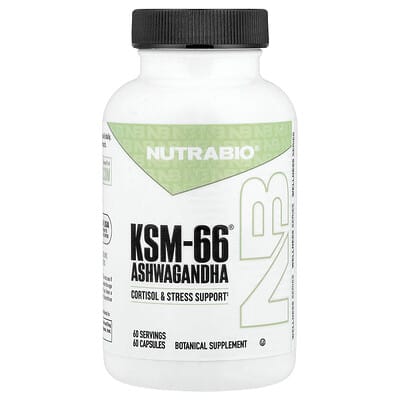
NutraBio, KSM-66® Ashwagandha
The gold-standard KSM-66 root extract, standardized to 5% withanolides — the exact form used in much of the clinical research on stress, cortisol, strength, and modest testosterone support. If you're going to try one adaptogen for the stress–vitality axis, this is the one with the most credible dossier behind it.
Best for: men with high-stress lives, poor recovery, or sleep that's wired-but-tired, who want the most-studied adaptogen; realistic expectation: calmer stress and better recovery first, with any hormonal benefit as a downstream bonus — not an overnight change.
Tongkat ali — the vitality botanical
Tongkat ali (Eurycoma longifolia) has research suggesting it can support a healthier stress-hormone profile and modestly improve libido, energy, and (in some studies) testosterone markers, particularly in men with low levels or high stress. The evidence is encouraging but thinner than ashwagandha's, and quality/standardization varies between products — so the extract matters.
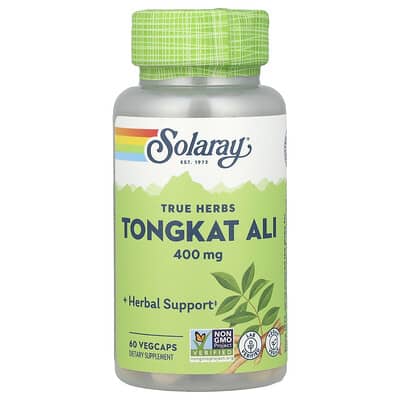
Solaray, Tongkat Ali
A straightforward 400 mg tongkat ali root supplement from a long-standing brand. It's a reasonable entry point if you want to try the vitality/libido angle of this botanical from a manufacturer you can trust. Keep expectations grounded: the research is promising but not as deep as ashwagandha's, and results are gradual.
Best for: men exploring the vitality/libido side of adaptogens who prefer an established brand; pair with the sleep and stress pillars for any meaningful effect.
Shilajit & maca — minerals, energy, and drive
Shilajit is a mineral- and fulvic-acid-rich resin used traditionally for vitality; some studies report modest testosterone and energy support, plus a genuine mineral-replenishment angle that fits the "fix the gaps" theme. Maca is interesting because it appears to support libido and subjective energy without clearly changing testosterone — a reminder that "feeling more vital" and "higher T" aren't the same thing, and you can improve the former directly.
Shilajit, the mineral angle. Paradise Herbs Shilajit Premium Extract (Himalayan, 250 mg) or Youtheory Men's Shilajit (PrimaVie®) offer standardized fulvic-acid sources for daily mineral and vitality support. And for the libido-without-testosterone effect, California Gold Nutrition Peruvian Maca is a simple, food-like adaptogen worth a fair trial.
Prefer an all-in-one male-vitality formula? Prime Perform is a purpose-built men's vitality blend designed to support energy and drive. It can be a convenient single-product route if you'd rather not assemble individual bottles — just read the label so you know exactly what (and how much) you're getting, and don't let a blend crowd out the sleep/training/stress foundations that matter more.
06The daily vitality protocol (a day that works)
Theory is nice; a routine you'll actually follow is better. Here's how the whole playbook fits into a single, sustainable day — built around the pillars, with the nutrients and (optional) adaptogens slotted in where they make sense. This isn't a rigid prescription; it's a template to adapt to your life.
Five anchor points, one sustainable rhythm. Nail the anchors and the hormones largely take care of themselves.
- Morning — light & fuel. Get daylight in your eyes early (sets your circadian rhythm, which governs testosterone's daily release), eat a protein-forward breakfast, and take your zinc and vitamin D with food.
- Midday — train. A focused resistance session (compound lifts, progressive overload). On non-lifting days, move — walk, mobility, light activity. Muscle is metabolic and hormonal infrastructure.
- Afternoon — decompress. A real stress reset: a walk outside, breathwork, or a hard stop between work and home. This is where ashwagandha, if you use it, fits the cortisol-lowering goal.
- Evening — nourish. A balanced dinner with protein and healthy fats (don't chronically under-eat fat — it's a hormone-building block). Wind the evening down; dim lights, cut late caffeine and heavy alcohol.
- Night — recover. Magnesium glycinate, a consistent bedtime, and a protected 7–9 hours. This single block does more for your testosterone than anything in a bottle.
Make the nutrition anchors effortless. A protein-rich shake is the easiest way to hit your daily protein (which supports the muscle you're building). Blend CGN Whey Protein Isolate (27 g protein, unflavored) with fruit and a spoon of Peanut Butter & Co. in a Nutribullet for a 60-second recovery drink. And keep hydration automatic with a visible 1-gallon jug on your desk — small systems, big consistency.
Track what actually governs your hormones. WHOOP 5.0 monitors sleep stages, recovery, strain, HRV, and even a Stress Monitor — a window onto the exact pillars (sleep, stress, training load) that drive your testosterone. Seeing your recovery trend is often the nudge that finally makes you protect your sleep. Not a treatment; an honest mirror for the habits that matter.
⚡ Body Composition Is a Lever — Fuel It Right
Carrying less excess fat is one of the most reliable ways to support healthy testosterone — but you can't out-train a diet you haven't dialed in. Use our free calculator to set a calorie and macro baseline for losing fat (or building muscle) sustainably, then build the training and recovery pillars on top.
Try Ileany Calorie Calculator Now 🎯07The reviews at a glance
Here's the short list, framed by role rather than hype. The pattern is deliberate: foundation minerals and the best-studied adaptogen first, the more speculative botanicals as optional add-ons.
| Product | Role | Best for | Evidence |
|---|---|---|---|
| NutraBio KSM-66 Ashwagandha | Stress / recovery adaptogen | High-stress men, recovery, sleep | Strong (for stress) |
| NOW Zinc Picolinate | Foundation mineral | Low intake / heavy sweaters | Strong (if deficient) |
| CGN Vitamin D3 + K2 | Hormone-like vitamin | Low sun / indoor lives | Moderate (if deficient) |
| Doctor's Best Magnesium Glycinate | Recovery + sleep mineral | Stress, sleep, training | Moderate (if deficient) |
| Solaray Tongkat Ali | Vitality / libido botanical | Drive & energy support | Emerging |
| Paradise / Youtheory Shilajit | Minerals / vitality | Mineral replenishment | Emerging |
| CGN Peruvian Maca | Libido / energy (non-hormonal) | Drive without T change | Emerging |
| Prime Perform | All-in-one male vitality blend | Convenience seekers | Blend (read label) |
08Myths vs. facts + the TRT truth
The testosterone space is drowning in misinformation, so let's clear the worst of it — and then talk honestly about TRT, because it deserves nuance, not fear or hype.
"Testosterone boosters work like steroids."
They don't. No legal supplement produces anything close to the dramatic, rapid gains of anabolic steroids. Most "boosters" do little in healthy men; the few with evidence offer modest, gradual support. Anyone implying steroid-like results from a capsule is misleading you.
"Lower T after 30 means something's wrong with me."
A ~1%/year decline is normal aging, and most men stay in the healthy range for decades. Feeling less like you did at 22 is usually a mix of sleep, stress, activity, and body composition — all fixable — not automatically a hormonal disease.
"Eating soy / using plastic lowers your T."
The "soy makes men feminine" claim is vastly overstated; normal dietary soy doesn't meaningfully lower testosterone in men. Endocrine-disruptor concerns have some basis, but the practical levers (sleep, training, body fat, stress) dwarf these worries.
"More supplements = more testosterone."
Stacking ten products doesn't stack ten effects. The biggest, most reliable drivers are lifestyle habits, not pills. A focused, gap-filling approach beats a maximalist supplement cart every time.
"Lifting makes you shorter / cardio kills your T."
Resistance training is one of the best things you can do for your hormonal and metabolic health. Moderate cardio is healthy too; only extreme, chronic overtraining with poor recovery can suppress hormones. Train hard, recover well.
The TRT truth — honest, not hysterical
Testosterone replacement therapy is a legitimate, effective medical treatment for men with confirmed hypogonadism — diagnosed with symptoms plus low morning testosterone on repeat testing, under a physician's care. For those men, it can be genuinely life-changing. That's real, and it shouldn't be stigmatized.
What it is not is a cosmetic anti-aging shortcut for men with normal levels who just want an edge. The "low-T clinic on every corner" model that treats anyone over 30 with a vague complaint is a different thing, and it carries real considerations: TRT can suppress fertility (often significantly), raise red blood cell count, affect the prostate, alter cholesterol, and requires ongoing monitoring — usually for life once started. None of this means "never," but all of it means "only with proper diagnosis and medical supervision."
The honest bottom line
Testosterone after 30 is a story with far less drama — and far more agency — than you've been sold. Yes, it drifts down about 1% a year, and that's normal. No, you don't need to panic, and no, a "booster" isn't going to reverse time. What does move the needle, reliably and for free, is the unglamorous quartet: real sleep, regular heavy lifting, a healthy body composition, and a managed stress load. Master those and most men feel a bigger shift than any supplement could promise.
Then, and only then, do the supplements earn their place — and even there, honesty matters. Zinc, vitamin D, and magnesium help when you're low (and many men are). KSM-66 ashwagandha has the best evidence for the stress-and-recovery side. Tongkat, shilajit, and maca are modest, optional extras for vitality and drive. None of them replace the pillars, and none of them come close to steroids — so treat any product that implies otherwise with the skepticism it deserves.
And if you have persistent symptoms that don't budge with better habits, do the adult thing: get a morning blood test and talk to a doctor. True low-T is real and treatable, TRT is a legitimate option for those who genuinely need it, and both deserve a real diagnosis rather than a guess or a checkout cart.
Build the day, lift the weights, protect the sleep, fill the gaps, and keep your expectations honest. That's the protocol — and it works not because it's exciting, but because it's true.
Frequently asked questions
Does testosterone really drop after 30?
Yes, but gradually — about 1% per year from roughly age 30, which is normal aging, not a disease. Most men stay within the healthy range for decades. A slow decline is very different from true hypogonadism, which is a medical diagnosis based on symptoms plus low morning testosterone on repeat testing.
What actually raises testosterone naturally?
The strongest levers are lifestyle: 7–9 hours of quality sleep, regular resistance training, losing excess body fat, and managing chronic stress/cortisol. Correcting zinc, vitamin D, and magnesium deficiencies helps if you're low. Herbs like ashwagandha (KSM-66), tongkat ali, and shilajit have emerging but more modest evidence. No supplement replaces the foundations.
Do testosterone booster supplements work?
Most over-the-counter "boosters" are overhyped and don't meaningfully raise testosterone in healthy men. A few ingredients have modest, conditional evidence — mainly correcting a deficiency (zinc, vitamin D) or, with smaller effects, adaptogens like ashwagandha that lower stress. Be skeptical of anything promising steroid-like gains.
When should I see a doctor about low testosterone?
If you have persistent symptoms — low libido, erectile difficulty, chronic fatigue, muscle loss, fat gain, low mood, or reduced motivation — especially if worsening. Diagnosis needs morning total testosterone blood tests (usually repeated), sometimes with free T, LH, FSH, and other hormones, interpreted by a clinician. Don't self-diagnose or self-treat with hormones.
Is TRT safe?
TRT is a legitimate treatment for confirmed hypogonadism under medical supervision, but it's not a cosmetic anti-aging shortcut. It can suppress fertility, raise red blood cell count, affect the prostate, and requires ongoing monitoring. Never start it without proper diagnosis and oversight, and never use anabolic steroids bought outside medicine — they're dangerous and illegal.
How fast can I expect changes from a natural protocol?
On a realistic timeline, not overnight. Sleep, training, and fat loss can shift hormones and how you feel over weeks to a few months; correcting a deficiency may help within weeks. Supplements, if they help at all, are modest and gradual. Anyone promising rapid, dramatic gains from a pill isn't being honest.
References & further reading
- Endocrine Society — Clinical Practice Guideline: Testosterone Therapy in Men with Hypogonadism (diagnosis, treatment, monitoring).
- American Urological Association (AUA) — Guideline on the evaluation and management of testosterone deficiency.
- Leproult R, Van Cauter E — effect of one week of sleep restriction on testosterone levels in young men (JAMA).
- Kraemer WJ, Ratamess NA — hormonal responses and adaptations to resistance exercise and training.
- Corona G, et al. — obesity, aromatization, and the relationship between body fat and testosterone.
- Cumming DC, et al. — the hypothalamic–pituitary–adrenal (cortisol) and gonadal (testosterone) axis interplay.
- Prasad AS — zinc deficiency and hypogonadism; effects of zinc repletion on testosterone.
- Pilz S, et al. — vitamin D status and testosterone; effects of vitamin D supplementation.
- Cinar V, et al. — magnesium supplementation and free/total testosterone in sedentary and athletic men.
- Chandrasekhar K, et al. — KSM-66 ashwagandha: cortisol, stress, and testosterone/strength outcomes (randomized trial).
- Talbott SM, et al. / Ismail M, et al. — Eurycoma longifolia (tongkat ali) and stress hormones, libido, and testosterone markers.
- Pandit S, et al. — purified shilajit and testosterone/energy markers; Zenico T, et al. — shilajit clinical trial.
- Gonzales GF, et al. — maca and sexual desire / subjective energy (independent of testosterone change).
Comments
Post a Comment