
Omega-3 for Crohn's Disease: Does It Really Reduce Inflammation?
The mechanism is beautiful. The marketing is loud. The clinical evidence is… complicated. Here's the honest 2026 verdict on fish oil and Crohn's — what it can do, what it can't, and how to use it safely if you choose to.
The biology is genuinely elegant — omega-3 fats are turned into molecules that actively help switch inflammation off. Whether that translates into a Crohn's treatment is the real question.
📋 What's inside
- The honest headline: mechanism vs. proof
- How omega-3 actually talks to inflammation
- What the trials really showed (the good and the disappointing)
- So why might a Crohn's patient still benefit?
- EPA vs DHA — which one, and what ratio
- Form matters: triglyceride vs ethyl ester, and taking it right
- Dose: the safe, sensible range
- Safety & interactions — read this before you buy
- Fitting omega-3 into a complete Crohn's plan
- Choosing a product without getting ripped off
- FAQ
If you've spent any time in a Crohn's support group or scrolling IBD content, you've seen the claim: "Take fish oil — it's a natural anti-inflammatory, it'll calm your gut." And it sounds so right. Omega-3 is the darling of the wellness world, the supplement your cardiologist, your dermatologist, and your Instagram feed all agree on. So of course it should help an inflammatory bowel disease. Right?
Here's where it gets interesting — and where most articles either oversell or oversimplify. The biology of omega-3 and inflammation is genuinely beautiful and well-established. The clinical evidence that fish oil treats Crohn's disease, specifically, is far more humble than the marketing suggests. Some early studies looked promising; some large, careful later studies did not confirm it. That gap between "the mechanism is real" and "the pill cures the disease" is exactly where honest guidance lives, and it's the whole point of this article.
So no, we're not going to tell you omega-3 is a Crohn's cure. We're also not going to throw the baby out with the bathwater, because there are very real, very practical reasons a person with Crohn's might choose to take it — reasons that have nothing to do with hype and everything to do with malabsorption, deficiency, and overall health. We'll lay out the mechanism, walk through what the trials actually found, explain EPA vs DHA and the right form and dose, flag the safety points that genuinely matter, and show you how omega-3 fits (as one piece, not the centerpiece) into a complete plan.
01The honest headline: mechanism vs. proof
Before we go deep, here's the three-card summary, because you deserve the bottom line up front. Everything that follows is just the evidence behind these three verdicts.
Hold those three together and you have the whole truth in your hands: the science of omega-3 and inflammation is solid; the science of omega-3 curing Crohn's is not — and yet, for many people with this disease, taking a good-quality fish oil is still a reasonable, even smart, supportive choice. The rest of this article is just unpacking why all three of those things can be true at once.
02How omega-3 actually talks to inflammation
Two families of fats, one shared doorway in your cell membranes. Whichever you eat more of tends to win the space — and the molecules it produces set the tone.
To understand why omega-3 should matter for an inflammatory disease, you need one piece of biochemistry, and luckily it's intuitive. Your cell membranes are built partly from fatty acids, and two families compete for the same real estate: the omega-6 family (rich in arachidonic acid, abundant in the modern Western diet) and the omega-3 family (EPA and DHA, from fatty fish and certain supplements).
When your immune system fires up, it grabs whatever fatty acids are sitting in those membranes and converts them into signaling molecules. Grab omega-6, and you tend to make pro-inflammatory eicosanoids — prostaglandins and leukotrienes that turn the heat up. Grab omega-3, and you make a different, calmer set of molecules, including resolvins and protectins — and the name says it all: these don't just fail to inflame, they actively help resolve inflammation and switch the response back down.
So the logic is clean and compelling: load the membranes with more EPA and DHA, and you (a) crowd out some of the pro-inflammatory raw material, and (b) give the body more of the molecules that turn inflammation off. On top of that, omega-3s dampen key inflammatory signaling routes (including NF-κB) and influence the activity of immune cells. In a disease defined by an overactive, misdirected immune response, this is exactly the kind of mechanism you'd hope for.
03What the trials really showed (the good and the disappointing)
This is the section the supplement ads skip, so let's sit with it carefully, because it's the heart of an honest answer. The story has two chapters, and they don't fully agree.
Chapter 1 — the early optimism
Through the 1990s and 2000s, several studies — including some well-known trials of high-EPA fish-oil formulations — reported that omega-3 could help maintain remission in Crohn's disease, reducing relapse rates compared with placebo. There were also smaller signals around symptom scores and inflammatory markers. For a while, the picture looked genuinely encouraging, and omega-3 earned a place in many people's (and some guidelines') thinking as a possible maintenance aid.
Chapter 2 — the larger, harder look
Then came the big, rigorous, multi-center trials designed to settle the question properly — most notably the large EPIC program testing a high-EPA formulation for maintaining remission. And the result was a cold shower: these trials did not confirm a benefit. Omega-3 was no better than placebo at keeping Crohn's in remission. Cochrane and other systematic reviews, weighing the whole body of evidence, have landed on a similarly cautious conclusion: there is no reliable evidence that omega-3 induces or maintains remission in Crohn's disease.
So how do we hold both chapters at once? A few honest possibilities, none of them conspiratorial:
- Earlier trials were smaller and more prone to chance findings; the big trials had the power to reveal the truth, and the truth was "no clear effect."
- Crohn's is heterogeneous. Two people with the same label can have very different disease — location, behavior, inflammation type — and a one-size-fits-all supplement may help a subgroup while showing nothing on average.
- Dose, form, and ratio varied wildly between studies, so "omega-3" wasn't really one consistent intervention.
- Mechanism ≠ clinical outcome. A real shift in inflammatory chemistry can be too small, or too indirect, to move the blunt endpoints trials measure (relapse, remission).
04So why might a Crohn's patient still benefit?
This is where the honest answer gets genuinely useful. Even if omega-3 isn't a Crohn's treatment, there are several grounded, practical reasons it can be a sensible support for someone living with this disease — reasons that have nothing to do with the failed remission trials.
- Deficiency is common. People with Crohn's frequently run low in omega-3 — because of restricted diets during flares, fat malabsorption (especially with ileal disease or bile-salt issues), and the general difficulty of eating fatty fish when your gut is unhappy. Correcting a genuine shortfall is reasonable on its own merits.
- Cardiovascular protection. Chronic inflammation raises cardiovascular risk, and omega-3's heart and triglyceride benefits are well-established in the broader population. Supporting the heart is never a bad idea alongside IBD care.
- General anti-inflammatory tone. Even if it doesn't move the remission endpoint, shifting membrane chemistry toward a calmer baseline may be a reasonable supportive goal — discussed with your clinician — particularly for someone whose diet is heavily skewed toward omega-6.
- Nutritional insurance during restricted phases. When flares force a narrow, low-residue diet, a purified supplement can help cover a nutrient that's hard to get from the limited foods you can tolerate.
05EPA vs DHA — which one, and what ratio
Not all omega-3 is the same, and if you're taking it with inflammation in mind, the EPA/DHA split matters. Here's the practical distinction:
| Fatty acid | Where it shines | Relevance to inflammation |
|---|---|---|
| EPA (eicosapentaenoic acid) | Anti-inflammatory pathways, mood, triglycerides | The more active of the two for the eicosanoid/resolvin pathways; usually the one emphasized when modulating inflammation is the goal |
| DHA (docosahexaenoic acid) | Brain, retina, cell-membrane structure, pregnancy | Important for membranes and also contributes to resolvins; essential for overall health but less "inflammation-forward" than EPA |
| ALA (alpha-linolenic acid — flax, chia, walnuts) | Plant-based omega-3 | The body converts ALA to EPA/DHA only inefficiently (often a few percent), so plant sources are a healthy bonus, not a full substitute for EPA/DHA |
The sensible conclusion: if you're choosing a supplement with an eye on inflammation, an EPA-forward formula (more EPA than DHA) is a reasonable preference, while still getting meaningful DHA for everything else it does. You don't need to obsess over an exact ratio — but a product that clearly lists both, leaning EPA, is a good target.
06Form matters: triglyceride vs ethyl ester, and taking it right
Here's a detail that quietly determines whether the omega-3 you pay for actually gets into your body. Fish oil comes in a couple of chemical forms, and they're not absorbed equally:
- Triglyceride (TG) form — the natural form, generally better absorbed, especially when the product is a re-esterified or "rTG" concentrate. Often the preferred choice.
- Ethyl ester (EE) form — a concentrated form that's perfectly legitimate and common, but typically absorbed less efficiently on an empty stomach. Taking it with a fat-containing meal largely closes the gap.
And that last point is the practical golden rule for everyone, regardless of form: take omega-3 with food that contains some fat. It's fat-soluble. Swallowing a capsule with black coffee on an empty stomach is leaving a lot of it on the table — and for someone with Crohn's who already struggles with absorption, that matters even more. A meal with a little olive oil, avocado, yogurt, or nut butter is the simple fix.
07Dose: the safe, sensible range
Because there's no agreed "Crohn's dose," the honest approach is to borrow from the well-established general and cardiovascular ranges and adjust with your clinician. As a working guide for supportive use:
| Goal | Combined EPA + DHA / day | Notes |
|---|---|---|
| General wellness / topping up a low intake | ~500–1,000 mg | A reasonable baseline, especially if you eat some fish |
| Anti-inflammatory / cardiovascular support | ~1,000–2,000 mg | The common supportive range; take with food |
| Higher / therapeutic doses | 2,000 mg+ | Only under medical supervision (blood-thinning effect, see safety) |
Read the supplement facts, not the front label. A bottle that shouts "1,000 mg fish oil" may only deliver 300 mg of actual EPA+DHA per capsule — the rest is other fats. Always add up the EPA and DHA lines specifically; that's your real dose. This single habit protects you from the most common marketing trick in the aisle.
08Safety & interactions — read this before you buy
Omega-3 is generally well-tolerated, but "natural" is not the same as "interaction-free," and with Crohn's you're often on a medication list that deserves respect. Run through this checklist:
- Blood thinners & bleeding risk. If you take warfarin, a DOAC, antiplatelets, or high-dose NSAIDs, or you have a bleeding tendency, talk to your doctor before adding omega-3 — the combined effect can increase bleeding risk.
- Before surgery or procedures. Many clinicians advise pausing higher-dose fish oil a week or so before surgery or a colonoscopy with planned biopsy/polypectomy. Confirm with your team.
- Disclose everything. Add omega-3 to the master list you show your pharmacist and gastroenterologist. It's a supplement, but it's still a biologically active substance.
- Purity & contaminants. Fish can carry mercury and other contaminants; a quality supplement is molecularly distilled and third-party tested (look for IFOS, USP, NSF, or similar). This is especially worth insisting on when you're taking it daily for a long time.
- Fat malabsorption. If you're in a flare with steatorrhea (greasy, floating stools), your ability to absorb a fat-soluble supplement is compromised — another reason to take it with food and to manage the flare itself first.
- Allergy. Obvious but vital: a fish or shellfish allergy means fish-derived omega-3 is off the table. Algal (vegan) EPA/DHA is the alternative — and worth knowing about regardless, since it's a clean, sustainable source.
09Fitting omega-3 into a complete Crohn's plan
The biggest mistake with any single supplement is treating it as a solo act. Omega-3 does its best work as one thread in a wider fabric — and the other threads are the ones with the real evidence behind them. Here's how it sits in the whole picture:
- Your medication comes first. Biologics, immunomodulators, and the rest do the heavy lifting on inflammation. Omega-3 supports; it does not substitute.
- Food is the foundation. In remission, fatty fish twice a week is the gold standard and is actively encouraged. A supplement is the bridge for the days (or flares) when fish isn't possible.
- Correct the real deficiencies. Get vitamin D, B12, iron, zinc, and magnesium checked — these are the gaps that most often drive fatigue and poor healing in Crohn's, and they deserve priority over any "anti-inflammatory" add-on.
- Manage the lifestyle levers. Sleep, stress, hydration, and gentle movement influence flare risk in very real ways — and they're free.
- Track and adjust. Introduce omega-3 as a single change, give it a fair window, and note how you feel and what your labs say. If it's not earning its place, you're free to drop it without guilt.
Build the plate that the supplement backs up. If you want a food-as-medicine lens for choosing gentle, anti-inflammatory, gut-supportive meals, The Encyclopedia of Power Foods maps 300+ foods to their properties (modern nutrition plus Traditional Chinese Medicine). Use it as inspiration, then filter every choice through your own tolerance and your dietitian's guidance — especially across flare vs. remission.
Curious about the wider anti-inflammatory, herbal picture? The Herbal Remedy Companion explains how herbs and "carrier" fats (yes — healthy fats can boost the absorption of fat-soluble compounds, which is exactly the logic we just used for omega-3) combine for effect. Treat it as education, then run anything you actually try past your pharmacist, since herbs can interact with IBD medications.
If reflux or upper-GI symptoms are part of your story (common, and sometimes confused with or layered onto IBD), the Reflux Summit brings together gut-health, ENT, and functional-medicine experts on the root causes of reflux, GERD, and LPR — useful context if upper-GI discomfort is complicating how you tolerate foods and supplements alike.
10Choosing a product without getting ripped off
Finally, the practical part: if you and your clinician decide omega-3 is a reasonable support for you, here's how to pick a bottle you can trust. The checklist is short and powerful:
- Read the EPA + DHA per serving, not the total "fish oil" number.
- Prefer a purified, third-party-tested product (IFOS / USP / NSF or equivalent) for contaminants.
- Lean EPA if inflammation is part of your reason; ensure meaningful DHA too.
- Triglyceride / rTG form if you can, or commit to taking EE with a fat-containing meal.
- Choose a format you'll actually take — softgels, enteric-coated, or a liquid if swallowing is hard during a flare.
With that checklist in hand, here are a few straightforward options from our vetted list, framed by who they fit rather than hype:
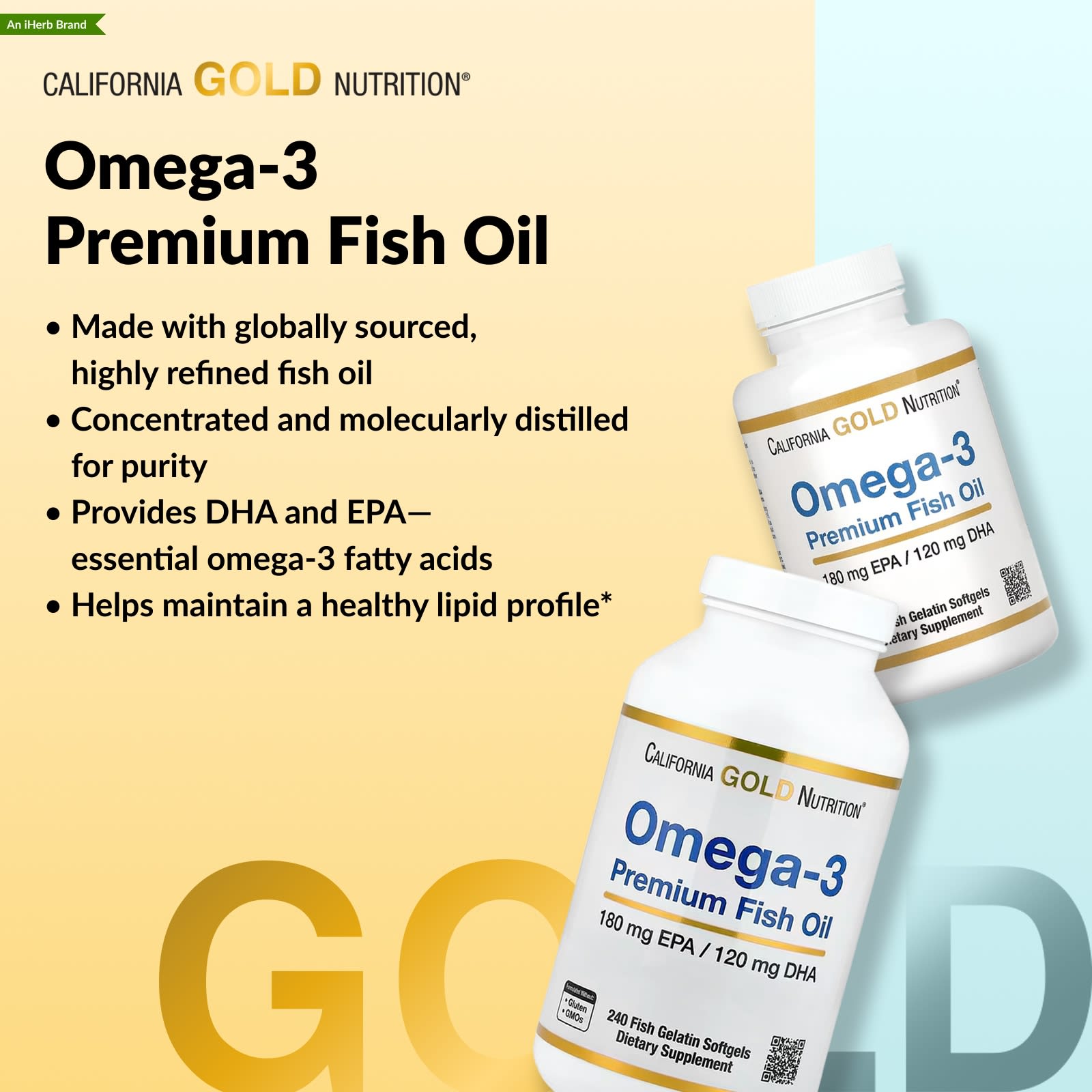
California Gold Nutrition, Omega-3 Premium Fish Oil
360 mg EPA + 240 mg DHA per serving in clean triglyceride form — a sensible, well-absorbed daily baseline for someone who eats little fatty fish and wants general plus anti-inflammatory support without a high pill burden. Take with a meal containing some fat.
Shop Omega-3 on iHerb ➔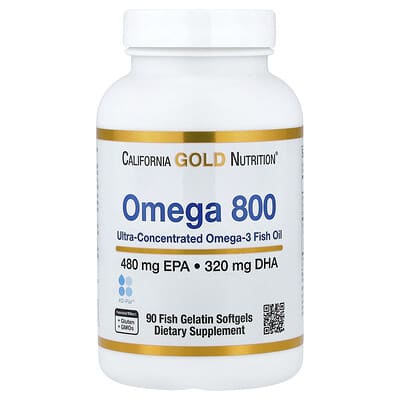
California Gold Nutrition, Omega 800 Ultra-Concentrated
480 mg EPA + 320 mg DHA per softgel in kd-pur triglyceride form — a concentrated, EPA-forward option when you want a stronger single daily dose with fewer capsules. A good fit when inflammation modulation is part of your goal, discussed with your clinician.
Shop Omega 800 on iHerb ➔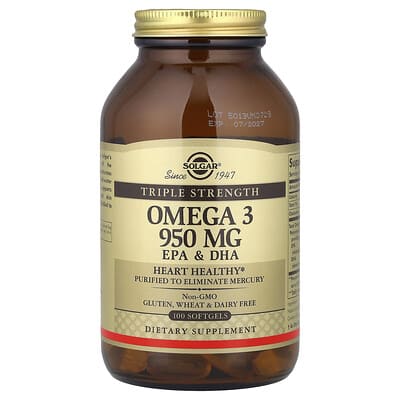
Solgar, Omega 3, EPA & DHA, Triple Strength
504 mg EPA + 378 mg DHA per serving from a long-trusted brand — a high-potency, balanced option for those who want robust EPA and DHA together in a quality, purified softgel. Particularly worth the "with food" rule at this concentration.
Shop Solgar Omega-3 on iHerb ➔A simpler, budget-friendly entry point: NOW Foods Omega-3 Fish Oil (180 mg EPA + 120 mg DHA per softgel) is a straightforward, no-frills way to start topping up a low intake — useful if you're testing whether you tolerate fish oil well before committing to a higher-potency product. And if you'd rather get some omega-3 from a gentle, fiber-rich food that's also flare-friendly when soaked, Mamma Chia Organic Chia Seeds add plant-based ALA plus soluble fiber (introduce slowly, and mind the stricture cautions from our diet guide).
And because omega-3 is only ever one piece, here are the companions that address the gaps that more often drive how a Crohn's patient actually feels — again, chosen to fit a real need, not to pad a cart:
The deficiency that matters most. Vitamin D is remarkably often low in Crohn's and linked to more active disease and weaker bones. California Gold Nutrition Vitamin D3 + K2 (MK-7) pairs D3 with K2 to direct calcium toward bone — check your level first and confirm the dose with your team.
Antioxidant backup. Chronic inflammation means chronic oxidative stress. NOW Foods NAC with Selenium supports the body's own antioxidant (glutathione) system — a reasonable supportive layer, cleared with your clinician.
When absorption is the bottleneck. If fat or protein malabsorption is part of your picture, NOW Foods Super Enzymes (with pancreatin, ox bile, and plant enzymes) may help you actually absorb the fats and nutrients in your meals — including the omega-3 you're taking. Evidence in Crohn's is limited, so treat it as a "try with your dietitian and see" tool.
See the lifestyle levers that move your gut. Stress and poor sleep are genuine flare triggers, and they're hard to manage if you can't see them. WHOOP 5.0 tracks sleep stages, HRV, and a daily stress/recovery picture, so you can catch a climbing load and act on it before it tips into a flare. Not a treatment — an honest mirror for the factors that quietly influence your disease.
⚡ Make Sure the Whole Plate Adds Up
Omega-3 is a detail; your overall intake is the foundation. Because Crohn's can drive unintended weight loss and under-eating, use our free calculator to set a calorie and macro baseline that supports healing, then refine it with your dietitian for what your gut tolerates in each phase.
Try Ileany Calorie Calculator Now 🎯The honest bottom line
So — does omega-3 reduce inflammation in Crohn's disease? At the level of biology, genuinely yes: EPA and DHA feed the body's own inflammation-resolving machinery, and that mechanism is real and elegant. At the level of clinical treatment, honestly no: the large, careful trials did not confirm fish oil as a way to induce or maintain remission, and it should never be presented as a cure or a replacement for your prescribed therapy.
And yet — at the level of practical, supportive care — a good-quality omega-3 can still be a perfectly reasonable choice for many people with Crohn's: because deficiency is common, because the heart and general health benefit, and because it's one more gentle way to nudge an over-inflammatory system toward calm while you treat the disease the proven way.
That three-part answer — real mechanism, unproven as treatment, sensible as support — is the whole truth, and it's far more useful than either the hype or the dismissal. Choose an EPA-forward, purified, triglyceride-form product if you go that route; take it with food; keep the dose in the moderate range unless your doctor says otherwise; flag it on your medication list; and let it play its proper role as backup singer in a plan your gastroenterologist and dietitian are leading.
You're allowed to use the things that help, as long as you know what they can and can't do. That clarity is the empowerment — not the miracle, but the steady, informed, kind management that actually adds up to a life lived well between flares.
Frequently asked questions
Does omega-3 reduce inflammation in Crohn's disease?
Mechanistically, yes — EPA and DHA give rise to anti-inflammatory resolvins and protectins and compete with the pro-inflammatory omega-6 pathway. Clinically, the picture is mixed: some older trials suggested a benefit for maintaining remission, but large later trials did not confirm omega-3 as a reliable treatment for inducing or maintaining remission. So it's best viewed as a supportive add-on, not a treatment.
Should people with Crohn's take an omega-3 supplement?
Often yes, but for reasons beyond treating inflammation. Many people with Crohn's are low in omega-3 due to malabsorption, restricted diets, or fat malabsorption, and omega-3 supports general and cardiovascular health. It's a reasonable supportive supplement when cleared with your gastroenterologist — but it should not replace your IBD medication.
What is the right dose of omega-3 for Crohn's?
There's no single agreed dose for Crohn's. For general anti-inflammatory and cardiovascular support, many clinicians are comfortable with about 1,000–2,000 mg of combined EPA plus DHA daily, taken with food. Higher doses should only be used under medical supervision, partly because high-dose omega-3 can have a mild blood-thinning effect.
EPA or DHA — which matters more for inflammation?
For inflammatory pathways, EPA is generally considered the more active of the two, and EPA-forward formulas are often preferred when modulating inflammation is the goal. DHA remains important for brain and cell-membrane health. A quality supplement providing both, leaning EPA, is a sensible choice.
Is fish oil safe with Crohn's medications?
Usually yes at moderate doses, but you must tell your doctor. Omega-3 can have a mild anticoagulant effect, so caution is needed if you take blood thinners or are scheduled for surgery, and it should be disclosed alongside all your IBD medications. Always use a purified, third-party-tested product.
Can I get enough omega-3 from food instead of supplements?
Fatty fish like salmon, sardines, and mackerel twice a week is the gold standard and is encouraged in remission. During flares, or if you can't tolerate or absorb fish well, a purified supplement is a practical alternative. Plant sources like flax and chia provide ALA, which the body converts to EPA and DHA only inefficiently, so they're a healthy bonus rather than a full substitute.
References & further reading
- Cochrane Database of Systematic Reviews — omega-3 fatty acids for maintenance of remission in Crohn's disease.
- EPIC trial program — high-EPA fish oil for maintaining remission in Crohn's disease (negative findings).
- American Gastroenterological Association (AGA) & ECCO guidance on nutrition and complementary approaches in IBD.
- Reviews on omega-3-derived specialized pro-resolving mediators (resolvins, protectins) and inflammation resolution.
- Comparative bioavailability of triglyceride vs ethyl-ester omega-3 forms; effect of dietary fat on absorption.
- Omega-3 fatty acids and cardiovascular / triglyceride outcomes — established evidence base.
- Micronutrient and fatty-acid deficiencies in inflammatory bowel disease — prevalence and management.
- Safety reviews: omega-3, anticoagulation, bleeding risk, and perioperative considerations.
- Contaminant and purity standards for fish-oil supplements (molecular distillation; third-party testing).
Comments
Post a Comment