
Why Stress Makes You Exhausted (Even After a Full Night's Sleep)
You slept eight hours and you're still running on fumes. That's not laziness — it's a stress response that never switched off. Here's the mechanism, the self-feeding loop, what to rule out first, and the protocol that actually breaks the cycle.
Stress isn't just in your head — it's a full-body energy drain that keeps the engine revving even when you're trying to rest.
📋 What's inside
- What actually happens: the HPA axis and the cortisol crash
- The loop: why stress feeds its own fatigue
- Rule these out first — fatigue isn't always stress
- The evidence ladder: what actually restores energy
- The four pillars that break the loop
- The supplements with real evidence (and honest limits)
- The daily protocol: a day that unwinds the loop
- Myths vs. facts
- FAQ
Here's a sentence almost everyone has thought: "I slept eight hours — why am I still exhausted?" And here's the part that makes it maddening: you did the "right" thing. You went to bed, you got the hours, and yet you woke up feeling like the night never happened. So you assume something's wrong with you — that you're lazy, out of shape, or just getting older.
Usually, none of that is true. What's far more likely is that your stress response never fully switched off — and a body stuck in low-grade "alert" mode burns energy, fragments sleep, and tenses muscles around the clock, whether you're aware of it or not. The fatigue you feel isn't a character flaw. It's the bill coming due for a nervous system that's been running a marathon while you thought it was resting.
This guide goes deeper than "stress makes you tired." We'll walk through the actual biology — the HPA axis, the cortisol curve, and the crash that follows — then map the self-feeding loop that keeps the fatigue going. Critically, we'll pause to rule out the medical causes that masquerade as stress fatigue, because that step is where a lot of people get hurt by skipping it. Then we'll rank what actually restores energy by strength of evidence, build a daily protocol you can live with, and look honestly at the supplements that have real data behind them — and the ones that are mostly marketing.
01What actually happens: the HPA axis and the cortisol crash
To understand stress fatigue, you need one system and one hormone. The system is the HPA axis — a relay between your Hypothalamus (in the brain), your Pituitary gland, and your Adrenal glands (sitting on top of your kidneys). When your brain perceives a threat — a deadline, an argument, a bill, a worrying thought — this relay fires and your adrenals release cortisol (alongside adrenaline).
Designed for short bursts, the stress system is brilliant in an emergency — and exhausting when it's asked to stay on all day, every day.
This system is a masterpiece of design — for short bursts. A spike of cortisol floods your bloodstream with glucose, sharpens your focus, and readies your muscles. Then the threat passes, the hormones clear, and you recover. That's acute stress, and it's fine.
The problem is chronic stress — the kind with no finish line. Work pressure, financial worry, caregiving, relationship strain, constant notifications. Your brain can't tell the difference between a lion and an overflowing inbox, so the relay keeps firing, cortisol stays elevated (or its daily rhythm flattens), and your body never gets the "all clear." Over time this produces the signature pattern: wired-but-tired — alert and tense during the day, yet depleted, with a crash that sleep doesn't fully repair.
02The loop: why stress feeds its own fatigue
Here's what makes stress fatigue so sticky: it's not a one-way street. It's a self-reinforcing loop, where the fatigue you feel actually sets you up for more stress tomorrow. Four mechanisms keep the wheel turning:
- Sleep quality, not just quantity. Elevated evening cortisol fragments deep and REM sleep. You can log eight hours in bed and still miss the restorative stages — so you wake unrefreshed, which makes you less resilient to tomorrow's stress.
- Constant muscle tension. Stress keeps muscles (jaw, neck, shoulders, back)半-contracted around the clock. That low-level holding burns energy and causes the achy, "heavy" exhaustion people describe — fatigue you can literally feel in your body.
- Low-grade inflammation. Chronic stress nudges the immune system toward a pro-inflammatory state, and inflammation itself is profoundly fatiguing (it's why you feel wiped when you're fighting a virus). This is the "sickness behavior" pathway, running quietly in the background.
- The gut–brain axis. Stress alters gut motility and the microbiome, which feeds back into mood and energy via the vagus nerve and microbial metabolites. An unsettled gut and a drained mind reinforce each other.
And then the loop closes: a fatigued, poorly-slept, inflamed person has a lower threshold for stress — the same workload that felt manageable now feels overwhelming, which triggers more cortisol, which worsens sleep and tension further. Round and round. This is why "just sleep more" so often fails: you're treating one spoke of a wheel that keeps spinning.
03Rule these out first — fatigue isn't always stress
This is the section most "stress fatigue" articles skip, and it's the most important one. Fatigue is one of the most non-specific symptoms in medicine — it has dozens of causes, and stress is only one of them. Assuming it's stress (and treating it as such) while a medical cause goes unchecked is how people lose months or years feeling terrible. So before you optimize your sleep routine or buy an adaptogen, be honest about whether something else could be driving this.
| If your fatigue looks like… | A clinician may check for… |
|---|---|
| Tiredness + pale skin, breathlessness on exertion, brittle nails | Iron-deficiency anemia (CBC, ferritin) — very common, very fixable |
| Fatigue + weight change, feeling cold/heat, hair or skin changes | Thyroid disorders (TSH, free T4) |
| Loud snoring, waking unrefreshed, daytime sleepiness, morning headaches | Sleep apnea (sleep study) — sleep quantity looks fine, quality is poor |
| Fatigue + low mood, loss of interest, poor concentration | Depression / anxiety (which also overlap with and worsen stress) |
| Tiredness + tingling, brain fog, or limited diet | Vitamin B12 or folate deficiency |
| Fatigue + bone/muscle aches, low sun exposure | Vitamin D deficiency |
| New or worsening fatigue after a medication change | Medication side effects (sedating antihistamines, some blood-pressure meds, etc.) |
| Persistent, unexplained fatigue for 2+ weeks | A broader workup — see your doctor rather than guessing |
If iron is the missing piece. Iron-deficiency anemia is one of the most common — and most overlooked — causes of fatigue, especially in menstruating women, vegetarians, and endurance athletes. If your clinician confirms low iron/ferritin, a well-formulated repletion like NaturesPlus Hema-Plex (iron + B12 + folate + vitamin C) supports healthy red-blood-cell formation. Don't supplement iron "just in case" — excess iron is harmful; test first, replete under guidance.
04The evidence ladder: what actually restores energy
Once medical causes are off the table, the question becomes: what genuinely helps stress fatigue? Let's rank it honestly, because the gap between the strongest levers and the supplement-aisle promises is enormous. As with everything in this space, the most effective tools are the least glamorous — and the most expensive options sit near the bottom.
Notice the pattern: the rungs that move the needle most are free, and the ones with the loudest marketing sit near the bottom.
Two honest caveats for reading this ladder. First, the "moderate" supplements are conditional — magnesium helps most when you're low; ashwagandha's strongest effect is on stress and cortisol, not on energy directly. Second, "emerging" means the human evidence is smaller or shorter, so effects are modest and not guaranteed. We'll grade each one properly in section 6.
05The four pillars that break the loop
These four are where the real leverage lives — and conveniently, each one attacks a different link in the stress–fatigue loop. None are glamorous; all are within reach; together they outperform any stack on the market.
Protect sleep quality
Stress steals sleep quality, so defend it deliberately: a consistent wind-down, a cool dark room, screens off late, and a fixed wake time to anchor your rhythm. This is the single highest-return lever — better sleep lowers next-day cortisol and raises your stress threshold.
the #1 leverMove — gently counts
Movement is one of the fastest ways to complete the stress cycle and discharge built-up tension. You don't need to punish yourself: a brisk walk, mobility work, or light strength training all help. The goal is regularity, not intensity — overtraining on top of burnout backfires.
discharge tensionFuel steadily
Blood-sugar rollercoasters mimic and worsen stress fatigue. Prioritize protein, fiber, and healthy fats at each meal, stay hydrated, and go easy on the caffeine-after-2pm and alcohol-at-night duo — both of which quietly wreck the sleep you're trying to protect.
steady energyOffload the stress
Give the nervous system a genuine "all clear" each day: slow breathing (longer exhales activate the parasympathetic system), a real lunch break, time in nature, journaling a worry out of your head, or hard boundaries on work hours. Small, consistent decompression beats occasional grand gestures.
the "all clear"Make the sleep pillar stick. If falling or staying asleep is your weak link, the INSOMNIAC: The Ultimate Sleep Therapy guide breaks down the science of the overactive "insomniac brain" and practical ways to switch it off. Pair it with a wind-down ritual — Yogi Bedtime® tea (passionflower + chamomile) and a supportive cooling cervical pillow — and a low-dose melatonin (3 mg) if your rhythm is genuinely off. Better sleep is the most powerful "anti-fatigue supplement" there is.
Build the decompression ritual. A non-slip yoga mat turns five minutes of stretching, breathwork, or gentle yoga into a daily "all clear" for your nervous system — no gym, no equipment, no excuse. And keep hydration frictionless with a visible 1-gallon jug on your desk; dehydration quietly amplifies fatigue.
See the loop in your own data. WHOOP 5.0 tracks sleep stages, recovery, strain, HRV, and a Stress Monitor — a window onto the exact stress-and-sleep dynamics driving your fatigue. Watching a high-stress, low-recovery day show up in the numbers is often the nudge that finally makes you protect your wind-down. Not a treatment; an honest mirror for the habits that matter.
06The supplements with real evidence (and honest limits)
Now the part the supplement aisle would love you to skip past the caveats. A few ingredients have genuine research behind them for stress and fatigue — but the effects are modest, they work on top of the pillars (not instead of them), and they are supportive tools, not treatments for clinical anxiety or depression. Read them as "well-studied helpers," not "cures."
Ashwagandha (KSM-66) — the cortisol-and-stress adaptogen
Ashwagandha's strongest, most consistent effect is lowering perceived stress and cortisol — which is exactly the mechanism driving stress fatigue. Trials of the standardized KSM-66 extract report meaningful reductions in stress scores and cortisol, plus improvements in sleep quality and calm. It's arguably the most evidence-backed adaptogen for the stress side of this equation.
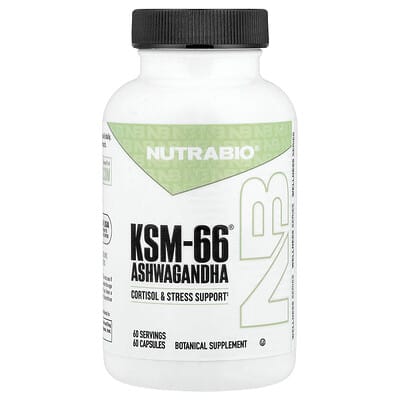
NutraBio, KSM-66® Ashwagandha
The gold-standard KSM-66 root extract, standardized to 5% withanolides — the exact form used in much of the clinical research on stress, cortisol, and sleep. If you're going to try one adaptogen for the stress-fatigue axis, this is the one with the most credible dossier behind it.
Best for: people with high-stress, wired-but-tired lives who want the most-studied adaptogen; realistic expectation: calmer stress and better sleep first, with energy returning as a downstream effect over 6–8 weeks — not an overnight fix.
A stress-support blend — when you want a broader formula
Some people prefer a single formula that combines several evidence-touching adaptogens rather than individual bottles. The honest trade-off: blends are convenient, but you get less of each ingredient than a standalone, so read the label and keep expectations proportional.
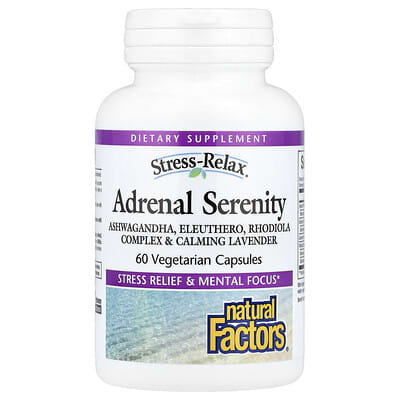
Natural Factors, Stress-Relax® Adrenal Serenity
A thoughtfully combined adaptogen blend — Sensoril ashwagandha for stress, rhodiola and eleuthero for resilience and focus, and lavender for calm. A convenient single-product route for demanding days, from a reputable line. Honest framing: doses per ingredient are lower than standalone products, so treat it as gentle daily support.
Best for: students and professionals who want one convenient "calm focus" capsule for high-pressure periods; prefer a single ingredient at a studied dose? Choose standalone KSM-66 ashwagandha instead.
Magnesium (glycinate) — the relaxation-and-sleep mineral
Magnesium supports hundreds of reactions, including nervous-system calming, muscle relaxation, and sleep quality — all directly relevant to stress fatigue, and depleted by stress itself. The glycinate form is gentle and well-absorbed, and taken in the evening it pulls double duty: easing tension and supporting sleep.
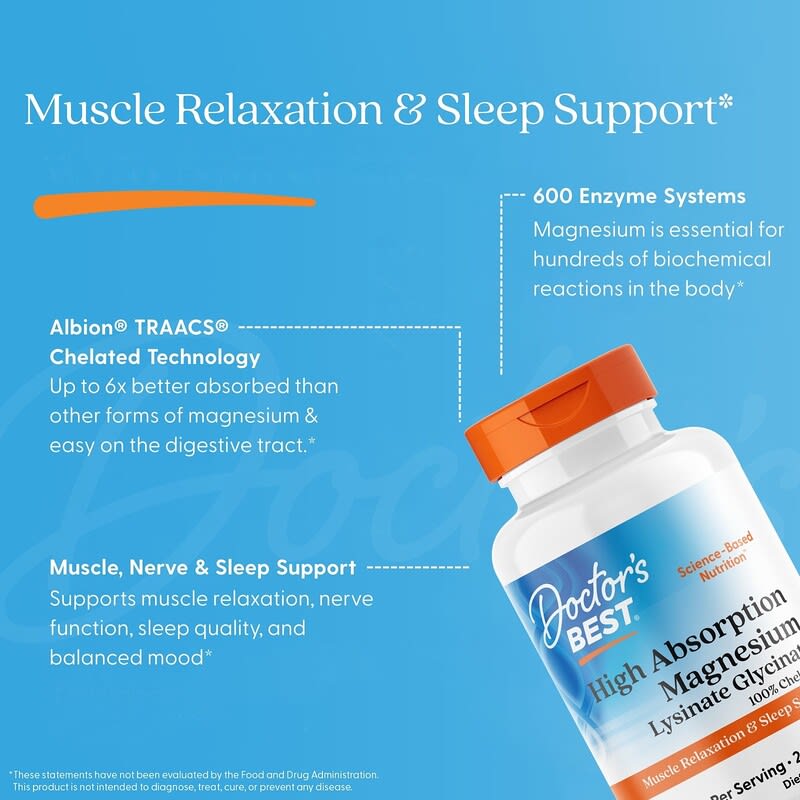
Doctor's Best, High Absorption Magnesium (Glycinate)
A highly absorbable, chelated magnesium glycinate that supports muscle relaxation, nervous-system calm, and sleep quality without the laxative effect of cheaper oxide forms. Taken in the evening, it's a simple, affordable way to support two pillars (decompression and sleep) at once.
Best for: people with tension, restless sleep, or likely low magnesium intake; prefer a powder? Natural Factors Magnesium Citrate Powder is an easy-to-mix alternative; Solaray Magnesium Glycinate is another solid glycinate option.
L-theanine — calm focus without the sedation
L-theanine (an amino acid from tea) promotes relaxation and "calm focus" without making you drowsy — which makes it useful for the daytime side of stress fatigue, when you need to function, not nap. It pairs especially well with caffeine, smoothing out the jittery edge while keeping the alertness.
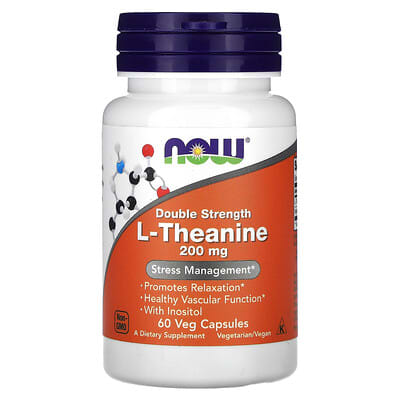
NOW Foods, L-Theanine
A clean, well-dosed L-theanine for relaxed alertness during the day — the complement to evening magnesium. It addresses the "wired" half of wired-but-tired without knocking you out, and it's a sensible partner to a morning coffee if caffeine tends to make you jittery.
Best for: people who need to stay sharp under pressure but feel keyed-up; note: it supports calm focus, not energy directly — pair it with the sleep and stress pillars for the real effect.
The low-tech wind-down that works. Sometimes the best "supplement" is a ritual. Yogi Stress Relief (Honey Lavender) — lavender, chamomile, and lemon balm — makes an excellent evening cue to start decompressing. Rituals signal safety to the nervous system; the tea is the anchor, the pause is the medicine.
Close the energy-nutrient gaps. Stress and a busy diet can leave gaps that worsen fatigue. Life Extension BioActive B-Complex supports energy metabolism and the nervous system, and Vitamin D3 + K2 addresses a deficiency that's remarkably common and fatigue-linked. As always, testing beats guessing — but these are sensible, low-risk foundations.
07The daily protocol: a day that unwinds the loop
Theory is nice; a routine you'll actually follow is better. Here's how the whole playbook fits into a single, sustainable day — each anchor attacking a different link in the loop. It's a template, not a prescription; adapt it to your life.
Five anchor points, one sustainable rhythm. You don't need all of them perfect — you need a few of them reliable.
- Morning — light & a gentle start. Daylight in your eyes early (anchors your cortisol rhythm and wake signal), a protein-forward breakfast, and water before caffeine. A few minutes of light movement tells your body the day has begun on purpose, not in panic.
- Midday — break the stress, don't bank it. Short, real breaks: a 2-minute breathing reset (longer exhales), a stand-and-stretch, L-theanine with your coffee if caffeine edges you toward jittery. The goal is to keep stress from compounding unchecked all morning.
- Afternoon — move to discharge. A brisk walk or a short session completes the stress cycle and burns off accumulated tension. This is the single best "I feel wired but tired" intervention there is.
- Evening — a wind-down ritual. A hard stop on work, screens dimmed/off, a calming tea, and a few minutes to offload tomorrow's worries onto paper (so they don't loop in bed). This is where you give your nervous system the "all clear" it never got during the day.
- Night — recover on purpose. Magnesium glycinate, a consistent bedtime, and a protected 7–9 hours in a cool, dark room. This block does more for your energy than anything in a bottle — because it's where the loop actually gets broken.
⚡ Steady Fuel Steadies Energy
Blood-sugar swings mimic and worsen stress fatigue. Use our free calculator to set a calorie and macro baseline that keeps your energy steady through the day — enough protein, the right fuel — so your nutrition supports your recovery instead of undermining it.
Try Ileany Calorie Calculator Now 🎯08Myths vs. facts
The stress-fatigue space is full of well-meaning nonsense. Let's clear the worst of it.
"I just need more coffee to push through."
Caffeine masks fatigue; it doesn't resolve it, and late caffeine wrecks the very sleep you need to recover. Used strategically (morning, moderate, optionally with L-theanine), it's fine. As a crutch to outrun burnout, it deepens the hole.
"My adrenals are 'burned out' / I have 'adrenal fatigue.'"
"Adrenal fatigue" is not a recognized medical diagnosis. The real, diagnosable condition is adrenal insufficiency (rare, serious, and tested for specifically). Chronic stress dysregulates the HPA axis's rhythm — that's real and fixable, but it's not your adrenals "running out."
"If I sleep 8 hours, stress can't be making me tired."
Stress degrades sleep quality, not just quantity. Elevated evening cortisol fragments deep and REM sleep, so eight hours in bed can still leave you unrefreshed. Hours ≠ restoration.
"A supplement will fix my stress fatigue."
Supplements are supportive, modest, and conditional — they work on top of sleep, movement, and stress management, not instead of them. No capsule replaces a nervous system that never gets the "all clear."
"It's all in my head / I'm just being lazy."
Stress fatigue is a real, whole-body physiological state — measurable in cortisol rhythms, sleep architecture, muscle tension, and inflammation. It's not a character flaw. (And it's also worth ruling out medical causes — see section 3.)
"I should train hard to beat the tiredness."
Movement helps — but piling intense training onto an already-burned-out system can backfire and deepen fatigue. Gentle, regular movement (walking, mobility, light strength) is the sweet spot when you're running on fumes.
The honest bottom line
Stress fatigue is real, it's physiological, and it's far more common than the "just sleep more" crowd admits. The mechanism is a stress response — the HPA axis and cortisol — that was built for short bursts but gets asked to run all day, every day. The result is a self-feeding loop: stress wrecks sleep quality, tenses your muscles, nudges inflammation, and unsettles your gut, and the fatigue that follows lowers your threshold for more stress tomorrow.
But that loop is also the good news, because it means you don't need a perfect overhaul — you need to break one or two links, reliably. Protect your sleep, move regularly, fuel steadily, and build one daily decompression ritual. Do those consistently and most people feel a genuine shift within a couple of weeks. Then, and only then, do the supplements earn their place: ashwagandha (KSM-66) for the stress/cortisol side, magnesium glycinate for tension and sleep, and L-theanine for calm daytime focus — modest, supportive tools, not cures, and never a substitute for the foundations or for medical care.
And please keep the two guardrails close: rule out the medical causes first (anemia, thyroid, sleep apnea, B12/D deficiency, depression) if your fatigue is persistent or unusual, and treat it as urgent if it ever comes with thoughts of self-harm or an inability to function. Stress fatigue is solvable — but it deserves honesty about what it is, what it isn't, and when it's something a doctor needs to see.
Break the loop where you can, rest where you must, and ask for help when you need it. That's not a quick fix — it's the real one.
Frequently asked questions
Can stress really make you physically exhausted?
Yes. Chronic stress keeps the HPA axis and cortisol elevated, disrupts sleep architecture, increases muscle tension, and can drive low-grade inflammation — all of which drain energy. The result is a fatigue that sleep alone doesn't fix, because the underlying stress response is still running.
Why am I still tired after a full night's sleep?
Because stress affects sleep quality, not just quantity. Elevated cortisol fragments deep and REM sleep, so eight hours in bed may not be eight hours of restorative sleep. Stress also depletes energy through constant muscle tension and a nervous system stuck on high alert.
What should I rule out before blaming stress?
Fatigue has many causes. Before attributing it to stress, a clinician may check for iron-deficiency anemia, thyroid disorders, vitamin B12 or D deficiency, sleep apnea, depression, medication side effects, and other conditions. Persistent fatigue (two weeks or more) deserves a medical evaluation, not just a supplement.
Which supplements have real evidence for stress and fatigue?
The best-supported are ashwagandha (especially KSM-66) for lowering cortisol and perceived stress, L-theanine for calm focus without sedation, and magnesium glycinate for relaxation and sleep quality. These are modest, supportive tools — not treatments for clinical anxiety or depression — and they work on top of sleep, movement, and stress management.
How fast does stress fatigue improve?
On a realistic timeline. Better sleep hygiene and stress practices can shift how you feel within days to a couple of weeks; correcting a nutrient deficiency may take weeks; adaptogens like ashwagandha are typically given 6–8 weeks. Anyone promising an overnight energy fix is not being honest.
When is stress fatigue a medical emergency?
If fatigue comes with thoughts of self-harm, severe hopelessness, chest pain, sudden weakness, or an inability to function, seek urgent or emergency care immediately. Otherwise, persistent fatigue lasting two weeks or more warrants a doctor's visit to rule out medical causes.
References & further reading
- Hannibal KE, Bishop MD — chronic stress, cortisol, and the HPA axis: mechanisms and health implications.
- McEwen BS — allostatic load and the physiology of chronic stress ("wear and tear").
- Åkerstedt T, et al. — stress, sleep, and sleep quality; cortisol's effect on sleep architecture.
- Chandrasekhar K, et al. — KSM-66 ashwagandha: cortisol, perceived stress, and sleep quality (randomized trial).
- Salve J, et al. — ashwagandha and stress/anxiety/sleep outcomes in adults.
- Hidese S, et al. — L-theanine effects on stress, cognition, and calm alertness.
- Cao Y, et al. / Abbasi B, et al. — magnesium supplementation and sleep quality / insomnia.
- Dantzer R, et al. — inflammation, cytokines, and "sickness behavior" (fatigue pathways).
- Cryan JF, Dinan TG — the gut–brain axis, the microbiome, and stress/mood.
- Cadegiani FA, Kater CE — critique of the "adrenal fatigue" concept (BMC Endocrine Disorders).
- General clinical guidance on the differential diagnosis of fatigue (anemia, thyroid, sleep apnea, B12/D deficiency, depression).
Comments
Post a Comment