

10,000 STEPS
IS MOSTLY A MYTH
The real number your body actually cares about.
A 1965 pedometer campaign, a 47,000-person meta-analysis, and the honest target you can stop chasing and start hitting.
If you've ever felt a quiet pang of guilt watching your step counter settle at 5,800 while the world insists on 10,000 — you've been sold a number that has more to do with a 1965 Japanese marketing campaign than with your actual biology. The good news: the underlying idea — that more daily movement is better for your heart, liver, and waistline — is real, well-studied, and genuinely worth your time. The bad news: the specific number 10,000 is mostly a round, catchy invention, and chasing it is one reason people give up on walking altogether.
This article untangles the myth from the mechanism. We'll trace where the number came from, show you the actual dose-response curve from the largest meta-analysis to date, explain why any extra step counts, and give you a progressive, no-guilt protocol you can run this week. No sacred numbers, no "must hit or fail" framing — just the science, a realistic target, and a pair of shoes that actually get worn.
📋 What's inside
01The origin: a 1965 marketing campaign
The number 10,000 did not emerge from a laboratory. It came from a product name: Manpo-kei (万歩計), a pedometer released by Yamasa Clock and Instrument Company in Japan in 1965. In Japanese, "manpo" literally means "ten thousand steps," and the campaign slogan was "Let's walk 10,000 steps a day." The number was chosen because it sounded good — round, memorable, mildly aspirational — and because a public-health researcher at Kyushu University, Dr. Yoshiro Hatano, had estimated that moving from the average ~3,500 steps to ~10,000 would burn roughly 500 extra calories a day. That estimate was plausible but loose, and the number caught on not because it was proven optimal, but because it was catchy.
The marketing stuck so hard that 10,000 became the default goal in pedometers, fitness apps, and public-health campaigns worldwide — long before anyone had run a proper trial to check whether it was the right target for most people. In other words: the number is a slogan with a scientist's rough guess stapled to it, not an evidence-based recommendation. That doesn't make walking bad — it makes the specific target overrated.
02The dose-response curve (what the studies actually show)
The largest, most definitive answer to the step-count question came in 2022, when a team published a meta-analysis in Lancet Public Health pooling 15 studies and nearly 47,500 adults with objective step tracking. The picture it painted is far more useful than any slogan.
The curve is the whole story. Benefits climb steeply from sedentary up to about 7,000–8,000 steps, then flatten. The marketing number sits on the plateau — meaning chasing it adds almost nothing to the health payoff of stopping earlier.
03What walking does to your body (organ by organ)
The "your organs when you walk" framing is more than cute — consistent daily walking delivers measurable, systemic benefits. None of them require hitting 10,000 specifically.
| System | What walking does | Minimum useful dose |
|---|---|---|
| Visceral fat & liver | Reduces the dangerous deep fat around organs and lowers liver fat — even without weight loss | ~150 min/week brisk walking |
| Heart & blood vessels | Lowers resting blood pressure, improves endothelial function, improves cholesterol profile | Any regular walking helps; more is better to ~7–8k |
| Blood sugar | Improves insulin sensitivity; a post-meal walk meaningfully blunts the glucose spike | 10–15 min walk after meals — a great companion to our type 2 diabetes diet plan |
| Brain & mood | Lowers depression and anxiety markers; improves executive function via increased blood flow and BDNF | Even 20 min/day shows benefit |
| Cortisol & stress | Regular walks help the nervous system come down from chronic activation — the same mechanism behind the morning cortisol rhythm we've written about | Daily, ideally with morning light |
| Sleep | Improves sleep onset and quality, especially with daytime outdoor exposure | Daytime walks beat evening walks for this |
| Joints & mobility | Lubricates joints (synovial fluid responds to movement) and maintains muscle mass | Regular low-impact walking is joint-friendly for most |
04Myth vs reality
The number came from a 1965 Japanese pedometer campaign, not a clinical study. Your body doesn't flip a switch at 10,000.
The largest meta-analysis shows benefits climbing steeply to that range, then flattening. Going beyond adds little for most people.
This framing makes people quit. It also ignores that the biggest single benefit comes between 0 and 4,000 steps — the easiest upgrade anyone can make.
There is no cliff. Going from 3,000 to 6,000 steps is where most of the mortality benefit lives.
The movement is what drives the benefit, not the counting. Many people walk regularly without ever checking a number.
Useful for habit-building; unnecessary for biology. Your phone pedometer is plenty.
Older adults actually plateau earlier — around 6,000–8,000 — with no added mortality benefit beyond that.
Consistent moderate daily movement is the goal — and it's very achievable.
Regular walking reduces visceral and liver fat even without weight loss — the mechanism is real and documented.
Brisk walking ~150 min/week is the well-supported dose — which fits neatly inside a daily step habit.
05Your "real" step target (a progressive protocol)

No tracker in her hand, no 10,000 obsession in her head — just a brisk, consistent walk, which is where the real benefit lives.
Instead of chasing a slogan, run a 4-week ramp. Measure your baseline, then add ~1,000 steps per week until you hit a comfortable daily target in the 6,000–8,000 range. That's the range the curve supports for most adults.
Wear your tracker (or phone) normally for 7 days and record your average daily steps. Don't try to change anything. This is your real starting point, and it's usually lower than people guess.
Each week, add a single small block — a 10-minute walk after lunch, a short evening loop, parking farther away — until you've added ~1,000 steps to your average. Small additions beat big weekend hikes you won't repeat.
Pick the daily average that feels sustainable — not exhausting, not boring. For most adults this sits between 6,000 and 8,000; for adults 60+, closer to 6,000–7,000 is plenty. Hold it there for 4+ weeks.
Once the habit is locked, you can add one brisk session per week, a gentle weighted vest, or an extra walk day. But only if you want to — the plateau is already where most of the benefit sits.
🎯 Pair Your Steps With the Rest of the Picture
Walking is one lever. Calorie balance, protein, and sleep are the other three. Get your daily targets dialed in once — then let the step habit do its work inside that framework.
Try Ileany Calorie Calculator Now 🎯06Tools that make it stick
You don't need any of this gear to benefit. But the right small tools remove the real friction points — seeing your baseline, staying hydrated on longer walks, and making the habit feel like a treat instead of a chore.

WHOOP 5.0 / MG Activity Tracker
Why it's here: the point of tracking is to see your real baseline and how daily movement affects your recovery. WHOOP gives you steps, strain, HRV, and sleep in one place — so you can watch your weekly step habit directly improve your recovery score, instead of relying on a single number. It's the tracker that makes the habit visible in the metrics that actually matter.
Affiliate link — we may earn a small commission at no extra cost to you.
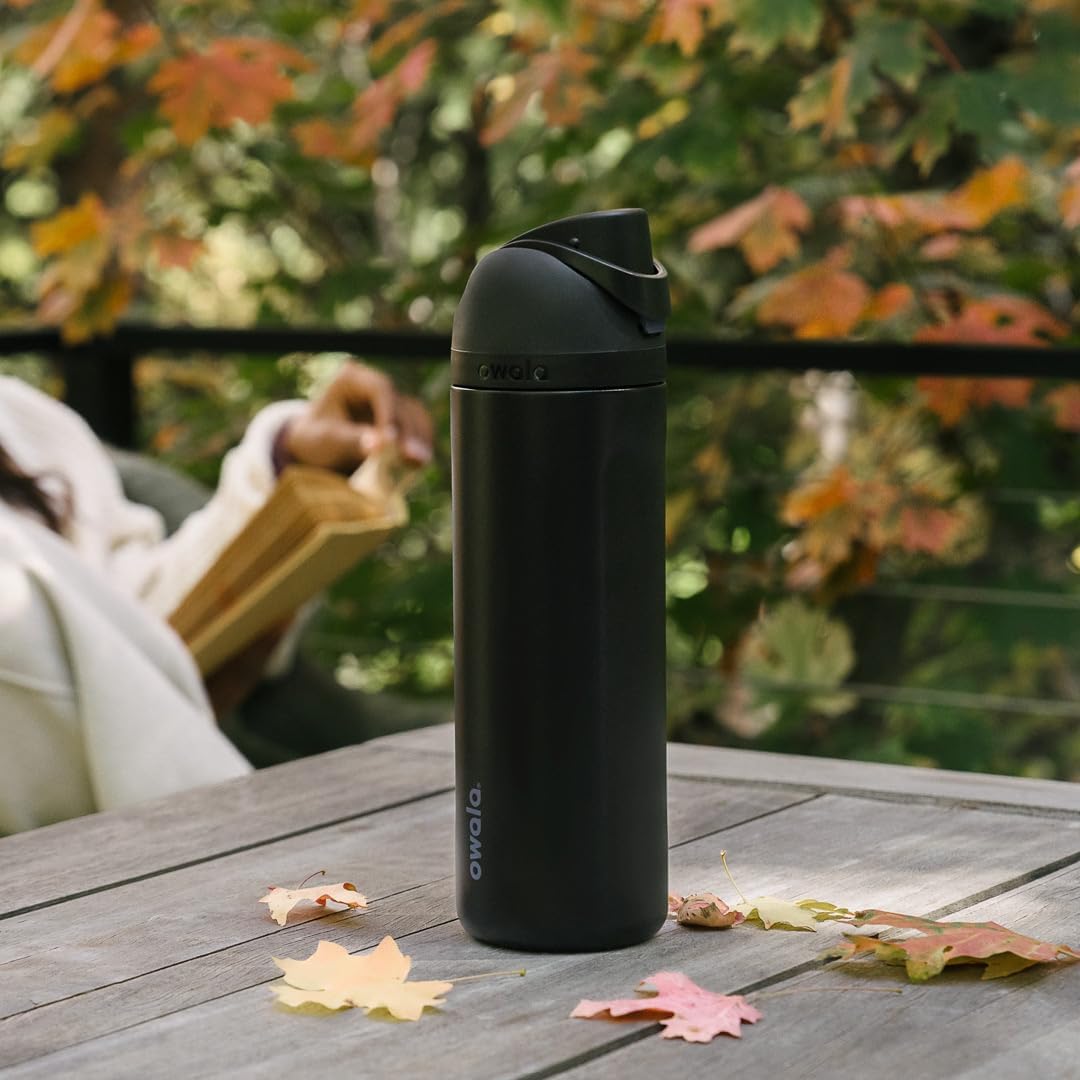
Owala FreeSip Insulated Stainless Steel Water Bottle
Why it's here: the most common reason a walk gets cut short is "I need water" or "it'll be warm." A well-insulated, leak-proof bottle that lives in your bag removes both. The FreeSip spout lets you sip without stopping — the small detail that turns a 20-minute walk into a 40-minute one.
Affiliate link — we may earn a small commission at no extra cost to you.

LMNT Zero Sugar Electrolytes
Why it's here: once your walks push past ~60 minutes, especially in warm weather, plain water isn't enough — and the fatigue you feel is often electrolyte loss, not "being out of shape." A single zero-sugar LMNT pack in your bottle extends comfortable walking time meaningfully without adding a single calorie.
Affiliate link — we may earn a small commission at no extra cost to you.
Three friction-removers that turn "I should walk more" into "I just did."


Affiliate links — we may earn a small commission at no extra cost to you.
07Cautions & exceptions
| Myth | Reality |
|---|---|
| "Walking replaces cardio training." | Walking is low-intensity NEAT — brilliant for baseline health, but it doesn't replace the VO₂max and heart adaptations of vigorous aerobic work. Keep both. |
| "More steps is always better, no ceiling." | Extreme daily volumes (15k+) without recovery can add injury risk for some. The curve flattens well before that — more isn't linearly better. |
| "10k is a medical recommendation." | It's a marketing number. Public-health bodies generally recommend ~150 min/week of moderate activity, which is achievable in ~7–8k daily steps for most people. |
| "You can walk off a bad diet." | You can't outwalk a calorie surplus indefinitely. Walking improves metabolic health regardless, but fat loss still requires energy balance. |
The honest bottom line
The number 10,000 is a marketing number from 1965 — catchy, round, memorable, and largely un-evidenced as a specific target. The underlying idea it rides on — that more daily movement is better — is genuinely well-supported. The largest meta-analysis to date, pooling nearly 47,500 adults, shows a clean dose-response curve that climbs steeply from sedentary up to about 7,000–8,000 steps per day, then flattens. For adults 60 and older, the plateau arrives even earlier. In other words: your body rewards consistent movement, and most of that reward is earned long before the slogan number.
So here's the practical reframe: stop chasing 10,000 as if it were a deadline, and start treating your step count as a continuous curve where every added step earns a little more — with the biggest single upgrade coming between doing nothing and doing a little. Run a 4-week ramp from your real baseline, settle into a sustainable 6,000–8,000 daily average (or 6,000–7,000 if you're over 60), and let that habit compound. Add intensity or volume later if you want to, but don't build the habit around a number that was invented to sell pedometers.
The best step count is the one you're still doing in a year. And that one is almost always lower than 10,000 — which is exactly why, this time, the myth-busting is the good news.
Keep reading on Ileany
Walking is one piece of the daily-health picture. These cover the adjacent levers.
Frequently asked questions
Is 10,000 steps a day a myth?
The specific number is largely marketing — it came from a 1965 Japanese pedometer campaign, not a clinical study. The idea that more daily steps is better for health is real and well-supported, but 10,000 is not a scientific threshold.
How many steps a day do I actually need?
The 2022 Lancet Public Health meta-analysis shows benefits climbing steadily to about 7,000–8,000 steps, then plateauing. For adults 60 and older, the plateau arrives earlier at ~6,000–8,000. Younger adults can push toward 8,000–10,000 for small extra benefit.
Does walking help reduce belly fat and liver fat?
Yes, as part of consistent daily movement. Regular walking reduces visceral fat and liver fat, especially alongside a sensible calorie intake. The benefit comes from the habit, not a magic step number.
What is NEAT and why does it matter?
NEAT is Non-Exercise Activity Thermogenesis — all the movement outside formal workouts. It can account for hundreds of calories a day and is strongly linked to long-term weight stability and metabolic health. Daily steps are the simplest way to measure it.
Do I need a fitness tracker to benefit?
No. The movement itself drives the benefit. A tracker or phone pedometer helps you see baseline and progress — useful for habit-building but not required for biology.
References & further reading
- Paluch AE, et al. — Daily steps and all-cause mortality: a meta-analysis of 15 international cohorts (nearly 47,500 adults). Lancet Public Health, 2022.
- Lee I-M, et al. — Association between step counts and all-cause mortality in older women. JAMA Intern Med, 2019.
- Tudor-Locke C, et al. — How many steps/day are enough? For adults. Sports Med, 2011.
- Hatano Y — historical work on the Manpo-kei pedometer and the 10,000-step concept (1960s).
- Levine JA — Non-exercise activity thermogenesis (NEAT) and its role in energy balance.
- Buffey AJ, et al. — Acute effects of breaking prolonged sitting on cardiometabolic risk (post-meal walks).
Comments
Post a Comment