

THE SUNSHINE NUTRIENT,
MEASURED HONESTLY
Sunlight, food, timing & the blood level that actually matters.
How much sun really makes vitamin D, which foods carry it, when to take it, and the optimal range to target — without the megadose hype.
Vitamin D is the nutrient the internet can't stop arguing about. One camp says nearly everyone is deficient and needs 5,000+ IU a day to fix everything from fatigue to immunity. The other says deficiency is rare, supplements are mostly pointless, and the whole thing is a sales funnel. As usual, the truth sits between them — and it's more interesting than either slogan.
Here's what's not in dispute: vitamin D is not really a vitamin at all. It's a pro-hormone your skin manufactures under UVB light, and its active form acts like a hormone across bone, muscle, immune, and metabolic tissue. What is disputed is how much you need, what blood level to target, and whether pills can substitute for sun. This deep dive walks the whole chain — how you make it, what your blood number means, how much sun and food actually deliver, when to take it, and how to dose it honestly — so you can leave with a number, a routine, and no hype.
📋 What's inside
- Why D is different (a pro-hormone)
- How you make it: the skin-to-kidney journey
- The blood-level question (ranges, debate, gauge)
- The sunlight protocol (what actually works)
- Food sources (the honest numbers)
- Timing & co-factors (fat, K2, magnesium)
- Dosing honestly (test, then dose)
- The products, honestly
- Myths & cautions
- FAQ
01Why D is different (a pro-hormone)
Most vitamins are cofactors you must eat because your body can't make them. Vitamin D breaks that rule: given UVB light on bare skin, your body manufactures it endogenously — which is why it's technically a pro-hormone. The "vitamin" label is historical, not functional. Once made (or eaten), D3 travels to the liver, then the kidneys, and is converted into a hormone — calcitriol — that binds receptors in dozens of tissues, influencing calcium balance, muscle function, immune signaling, and more.
That hormone status explains two things people get wrong. First, more is not linearly better: hormones work in ranges, and both too little and (rarely) too much cause harm — a U-shaped curve, not a "more = stronger" line. Second, the blood test you take (25(OH)D) is a storage marker, not the active hormone — it's the best proxy we have for status, but it's one piece of a system, not a verdict on your health.
02How you make it: the skin-to-kidney journey
Sun → skin → liver → kidney → hormone. Break the chain anywhere (no UVB, low sun, winter, covered skin) and the supply depends on food and supplements.
03The blood-level question (ranges, debate, gauge)
Now the number everyone asks about. The honest answer is that there's a range of reasonable, not a single magic value, and two respected bodies draw the line differently. The IOM (National Academy of Medicine) considers 20 ng/mL sufficient for bone health in the majority of people. The Endocrine Society recommends at least 30 ng/mL to minimize deficiency risk. Many clinicians and researchers aim for a middle band of roughly 30–60 ng/mL, which is where most observational data shows the lowest risk across bone and other outcomes.
What's not in dispute is the top end: levels above roughly 100–150 ng/mL carry real toxicity risk (hypercalcemia, kidney stones, vascular calcification) and are never a goal. Vitamin D follows a U-shaped curve — too little harms, and (rarely, usually from megadosing) too much harms. The sweet spot is a band, not a peak.
The teal band is the target. The left red zone is true deficiency; the right red zone is megadose territory. Most of the online argument is about the amber sliver between 20 and 30.
04The sunlight protocol (what actually works)
Sun is the original source, but it's also the most overestimated one — because synthesis depends on variables most advice ignores. Here's the honest physics and a workable protocol.

Midday, bare forearms, no glass between you and the sky — the conditions where a short exposure actually produces vitamin D.
UVB — the wavelength that makes D — is strongest around solar noon. Early morning and late afternoon light is rich in UVA but poor in UVB, so a long evening walk makes almost no D. Shorter midday exposure is more efficient than longer off-peak exposure.
Arms + legs (or a tank top) for ~10–30 minutes, several days a week, covers most light-skinned people. Darker skin needs longer — melanin is natural sunscreen, so 2–6× the time may be needed. The rule: a fraction of the time it takes to burn, never to burning.
Above roughly 33–37° latitude (think Los Angeles / Atlanta and north), the sun's angle in winter filters out nearly all UVB — you can sit outside for hours and make ~zero D from roughly November to February. That's when food and supplements carry you.
Glass blocks UVB (a sunny window makes no D). SPF 15+ sunscreen can cut synthesis ~90%+ in ideal use, though real-world application is partial. Aging skin makes less D, and higher body fat sequesters more of it — both argue for testing and, often, supplementing.
05Food sources (the honest numbers)
Food is the most underrated D source — and the most overhyped. Very few foods carry meaningful D, so here are the real heavyweights with approximate values (they vary by source, farming, and fortification):
06Timing & co-factors (fat, K2, magnesium)
Timing for vitamin D is refreshingly boring compared to the protein-timing myths we've debunked elsewhere (the anabolic window included). The one timing rule that's evidence-based: take it with fat. Vitamin D is fat-soluble, and studies show absorption is meaningfully higher (roughly a third or more) when taken with a fat-containing meal versus on an empty stomach. So anchor it to your largest meal — and if you eat within a time-restricted window like 16:8 intermittent fasting, take it with your biggest meal inside the window, not at a fasted odd hour. Morning vs. night? The evidence is thin and mixed; consistency beats clock-time. (A few people report better sleep taking it earlier; if that's you, move it to breakfast — but it's a preference, not a rule.)
The co-factor conversation is where hype creeps in, so here's the honest tier list. Magnesium genuinely matters: it's required for the enzymes that convert D to its active forms, and many people are low in magnesium — so pairing D with a good magnesium (glycinate) is sensible, low-risk, and supported by mechanism plus modest data. Vitamin K2 is the popular partner (the theory: it directs calcium to bone, not arteries). The mechanism is plausible and early human data encouraging, but high-quality trials are still limited — combining is common and generally safe for healthy adults, though anyone on blood thinners should clear K2 with their doctor first. And omega-3s make a natural pairing simply because D is fat-soluble and both live in fatty fish — taking your D with your omega-3 fish oil solves the "with fat" rule and stacks two nutrients that co-occur in nature.
07Dosing honestly (test, then dose)
The dose question has an honest, boring core: test, then dose. General guidance runs 600–800 IU/day (IOM RDA) with a safe upper limit of 4,000 IU for adults; the Endocrine Society suggests 1,500–2,000 IU to maintain ≥30 ng/mL. In practice, many adults need 1,000–2,000 IU daily to hold a comfortable level, and clinicians sometimes use short-term higher doses (e.g., 5,000 IU or prescription weekly boluses) to correct a true deficiency — under supervision. A rough rule of thumb: each ~100 IU/day raises blood levels by about 1 ng/mL over several months, though this varies widely with body fat, baseline, and genetics.
| Situation | Typical approach | Note |
|---|---|---|
| Regular sun, healthy | 0–800 IU (or none) | Sun + food may suffice; test to confirm |
| Winter / high latitude / indoor life | 1,000–2,000 IU/day | The classic supplement case |
| Darker skin, higher body fat, older age | 1,500–4,000 IU/day | Higher need; test to titrate |
| Confirmed deficiency (<20) | Short-term higher dose, then maintenance | Under clinician supervision; re-test in ~3 months |
| Pregnancy, kidney disease, sarcoidosis, on thiazides/digoxin | Individualized, medical guidance | D affects calcium — these need a doctor, not a blog |
🎯 Know Your Numbers, Not The Hype
Vitamin D is one input; your overall picture matters more. Use our free calculator to set your daily targets, then bring your next 25(OH)D result to a clinician to fine-tune the dose — that's the honest, test-driven way to do this.
Try Ileany Macro Calculator Now 🎯08The products, honestly
A few well-chosen options from our database, framed honestly: D3 is cheap and commodified, so the real value is in the formulation (with K2 or not, dose size) and your consistency. Pick the one that matches your situation.
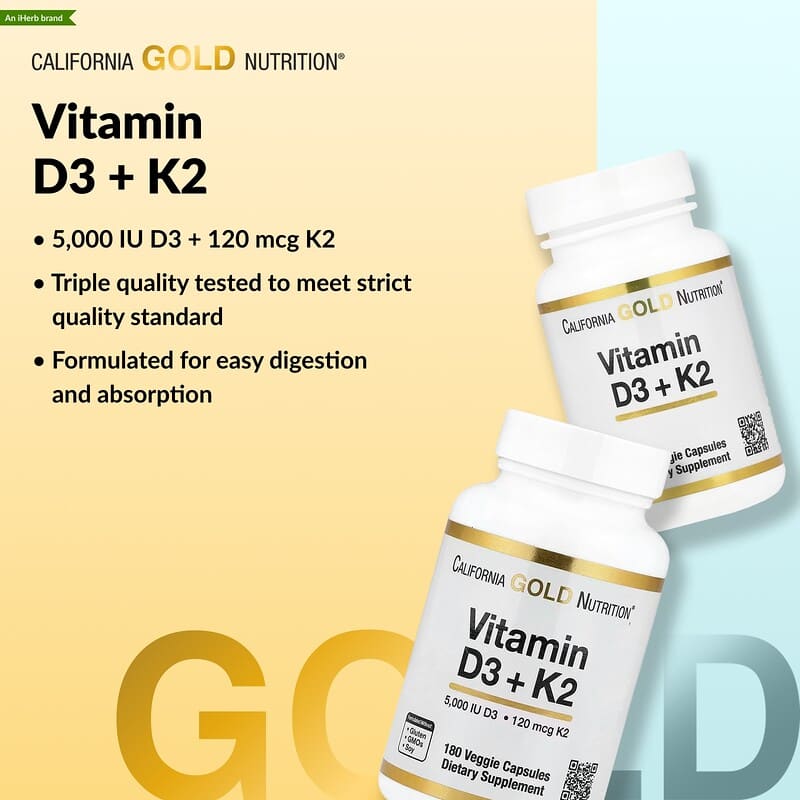
California Gold Nutrition, Vitamin D3 + K2 as MK-7
Why it's here: the popular combo done cleanly — a robust 5,000 IU D3 with the longer-acting MK-7 form of K2. Good for people with limited sun who want the D+K2 pairing in one capsule. Note 5,000 IU is above the 4,000 IU general upper limit, so it's best for those who've tested low or take it under guidance — not a blind daily default for everyone.
Affiliate link — we may earn a small commission at no extra cost to you. On blood thinners? Clear K2 with your doctor first.
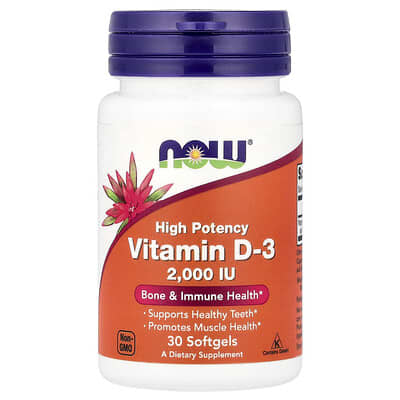
NOW Foods, Vitamin D-3 (2,000 IU)
Why it's here: the sensible, no-frills daily dose — 2,000 IU sits comfortably under the 4,000 IU upper limit and is enough for many people to maintain an adequate level, especially with some sun and food. If you don't want K2 or a high dose, this is the honest default.
Affiliate link — we may earn a small commission at no extra cost to you. Take with a fat-containing meal for best absorption.
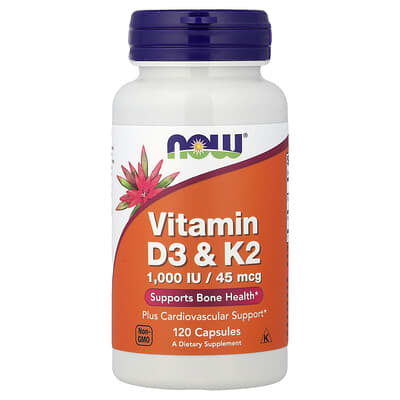
NOW Foods, Vitamin D3 & K2 (1,000 IU)
Why it's here: a lower-dose D3 with the MK-4 form of K2 — a good fit for people who already get some sun or take a multivitamin, and who want a gentle daily top-up with the K2 pairing rather than a big single dose.
Affiliate link — we may earn a small commission at no extra cost to you. On anticoagulants? Talk to your doctor before adding K2.
Pair your D3 with the two co-factors that have real rationale — and the fat that absorbs it.
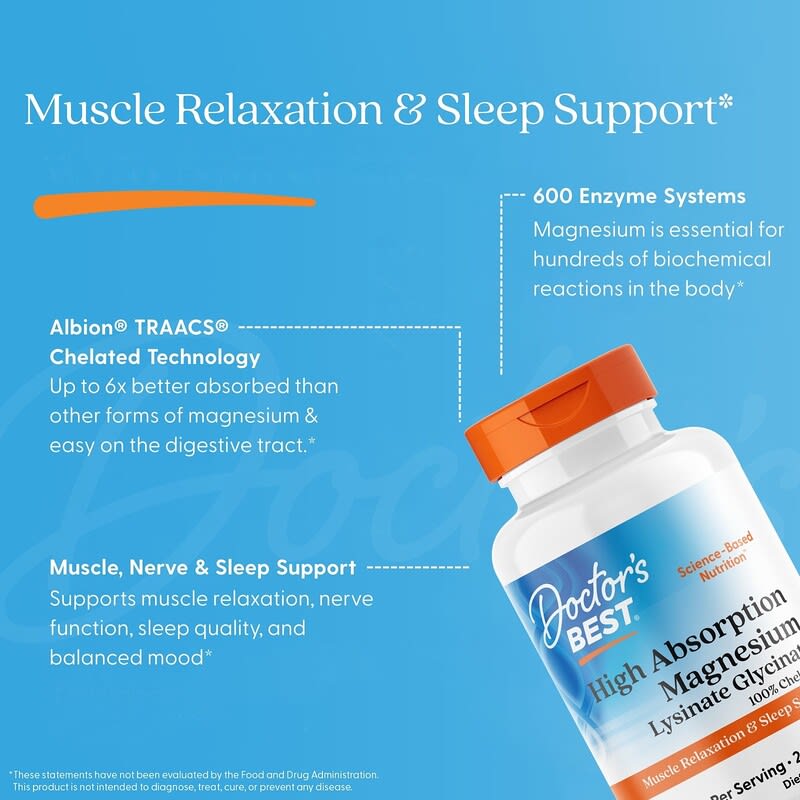
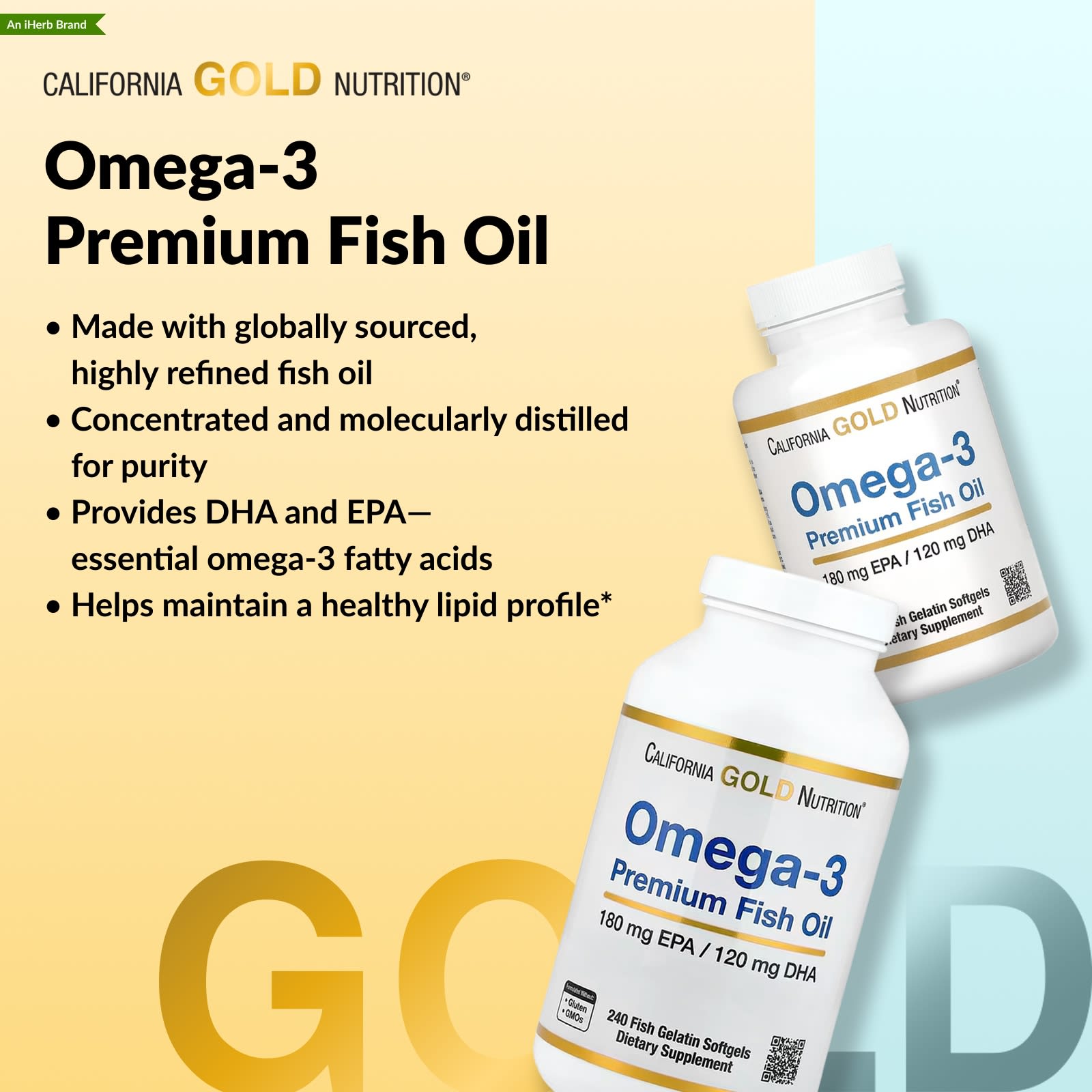
Affiliate links — we may earn a small commission at no extra cost to you. Fat with the dose is proven; magnesium has real rationale; K2 is plausible-but-emerging.
Food-first? Learn which foods actually carry D (and 300+ more). The Encyclopedia of Power Foods maps 300+ whole foods to their benefits — the perfect companion for building a diet that covers vitamin D and everything around it from real food first.
09Myths & cautions
| Myth | Reality |
|---|---|
| "Everyone needs 5,000+ IU daily." | Many need far less; the right dose follows your blood level, not a slogan. 1,000–2,000 IU maintains most people. |
| "More D = stronger immunity/bones, forever." | D is U-shaped. Beyond the optimal band, extra adds risk (hypercalcemia, stones), not benefit. |
| "You can get D through a sunny window." | Glass blocks UVB. A sunny window gives light for your rhythm, not vitamin D. |
| "Tanning beds are a good D source." | No. They're UVA-heavy, add skin-cancer risk, and are a poor D source. Avoid. |
| "Sunscreen causes deficiency." | Perfectly-applied high SPF can block most synthesis, but real-world use is partial; the bigger drivers are latitude, season, skin tone, and indoor life. Use sunscreen for long exposure; get short unprotected bursts for D. |
| "D cures fatigue/depression/everything." | Correcting a true deficiency helps related symptoms; megadosing a sufficient person does not. D is a nutrient, not a drug. |
The honest bottom line
Vitamin D earns its reputation the quiet way: it's a pro-hormone your skin makes under UVB, your liver stores as 25(OH)D, and your kidneys activate into a hormone that touches bone, muscle, immune, and metabolic tissue. The honest picture is a band, not a magic number — roughly 30–60 ng/mL is the comfortable target, below 20 is true deficiency, and above 100–150 is megadose territory nobody should aim for.
The practical routine is equally unglamorous and effective: short midday sun on real skin when your latitude and season allow, fatty fish and eggs as the food base, and a modest D3 (1,000–2,000 IU) taken with a fat-containing meal to close the winter/latitude/skin-tone gap — with magnesium as the sensible co-factor and K2 as the plausible-but-still-emerging partner. Test if you have reason to; dose to the result; re-test to confirm.
That's it. No 10,000 IU gambles, no tanning beds, no window-sitting, no cure-all claims. Just the sunshine nutrient, measured honestly and covered sensibly — which is exactly how a hormone, not a hype, should be treated.
Keep reading on Ileany
Vitamin D sits inside a bigger picture — timing, fasting, omega-3s, and metabolic health.
Frequently asked questions
How much sun do I need to make enough vitamin D?
Roughly 10–30 minutes of midday sun on arms and legs, several days a week, covers most light-skinned people; darker skin needs longer. Above ~33–37° latitude, winter sun makes little to none.
What is the optimal vitamin D blood level?
Most guidelines consider 20 ng/mL sufficient for bone health; the Endocrine Society recommends ≥30. Many clinicians target ~30–60 ng/mL. Above 100–150 carries toxicity risk.
Should I take vitamin D with food?
Yes — with fat. Absorption is meaningfully better with a fat-containing meal; anchor it to your largest meal. Time of day matters far less than consistency and fat.
How much vitamin D3 should I take per day?
General guidance is 600–800 IU with a 4,000 IU upper limit; many need 1,000–2,000 IU to maintain adequate levels, and deficiency correction uses higher supervised doses. Test to decide.
Can you get vitamin D through a window?
No. Glass blocks UVB, so a sunny window makes no vitamin D (though it still helps your circadian rhythm).
Do I need K2 with D3?
The mechanism is plausible and early data encouraging, but high-quality trials are limited. Combining is common and generally safe for healthy adults; on blood thinners, ask your doctor first.
References & further reading
- Institute of Medicine (National Academy of Medicine) — Dietary Reference Intakes for Calcium and Vitamin D (2011).
- Holick MF, et al. — Evaluation, treatment, and prevention of vitamin D deficiency: an Endocrine Society clinical practice guideline.
- Dawson-Hughes B, et al. — Meal fat content and vitamin D absorption (fat-soluble uptake studies).
- Webb AR, et al. — Influence of season and latitude on cutaneous vitamin D3 synthesis.
- Clemens TL, et al. — Increased pigment (melanin) reduces epidermal vitamin D3 synthesis.
- Mulligan GB, Licata A — Vitamin D toxicity and hypercalcemia (U-shaped risk).
- van Ballegooijen AJ, Pilz S — Vitamin D, K2, and cardiovascular/calcium metabolism (mechanism and emerging evidence).
- Uzma M, et al. — Magnesium as a co-factor in vitamin D metabolism and activation.
Comments
Post a Comment